Six days of digging.
One reason to come back.
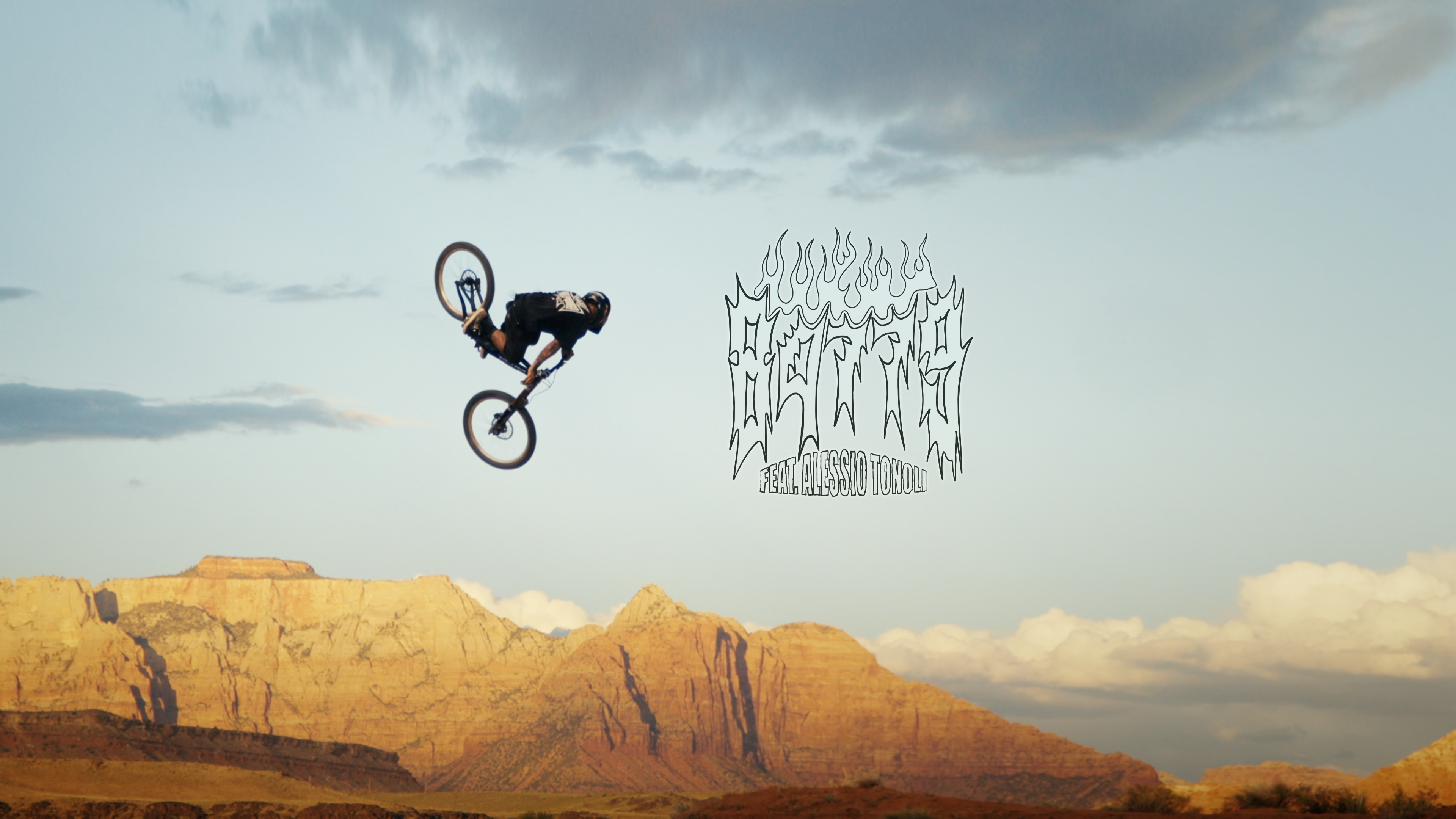
Even before Alessio Tonoli became one of the most talked-about freeriders of the 2025 season, there was this one thought: Utah. While he was attracting international attention with his performances at Darkfest, the Fest Series and his Whip-Off World Champion title at the Crankworx Joyride, another story was waiting for its right time. "84779" is the realisation of an idea that existed long before the world began to know his name.
A film by Andrin Beyeler
Between sand, stone and a thought that had been there for a long time
Alessio, take us back to the beginning. Where did the idea of going to Utah for your own project come from?
The idea has actually been around for a very long time. Long before I was even riding mountain bikes the way I do today. Back when we used to ride a lot of BMX and dirt jumps, Utah was already this place that people knew about:
"You want to go there someday. Not just to ride there, but to build something yourself, look for your own line and find out what's possible there."
For me, it was never a spontaneous idea, but rather something that was always in the back of my mind. And at some point you realise: Now it fits. In terms of skill, the feeling on the bike, everything that happened last season. I had a good year, was out on the big bike a lot and realised that I'm ready for something like this.
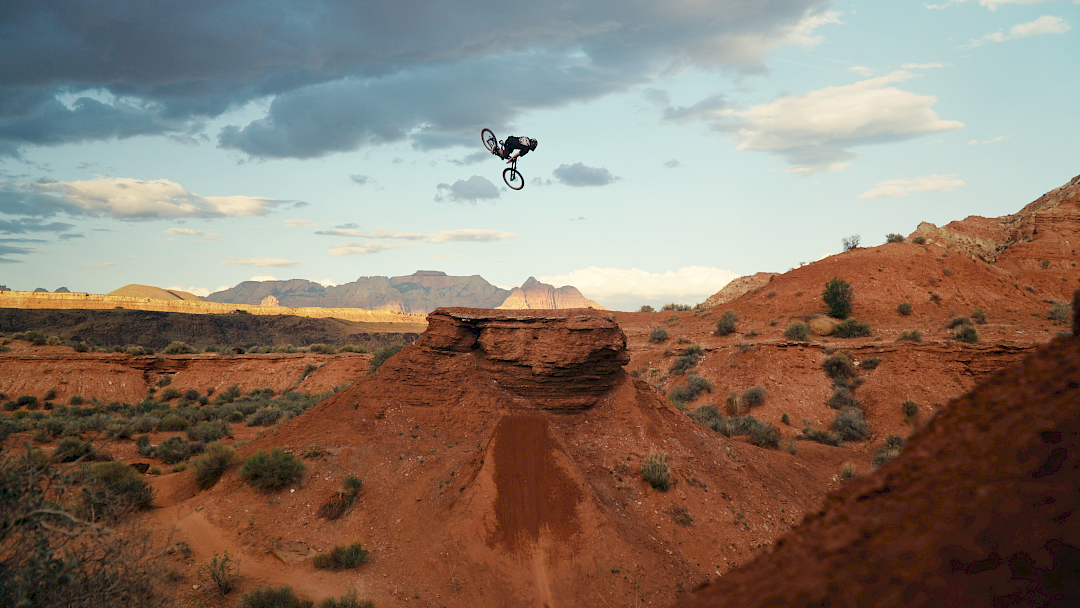
Why Utah in particular?
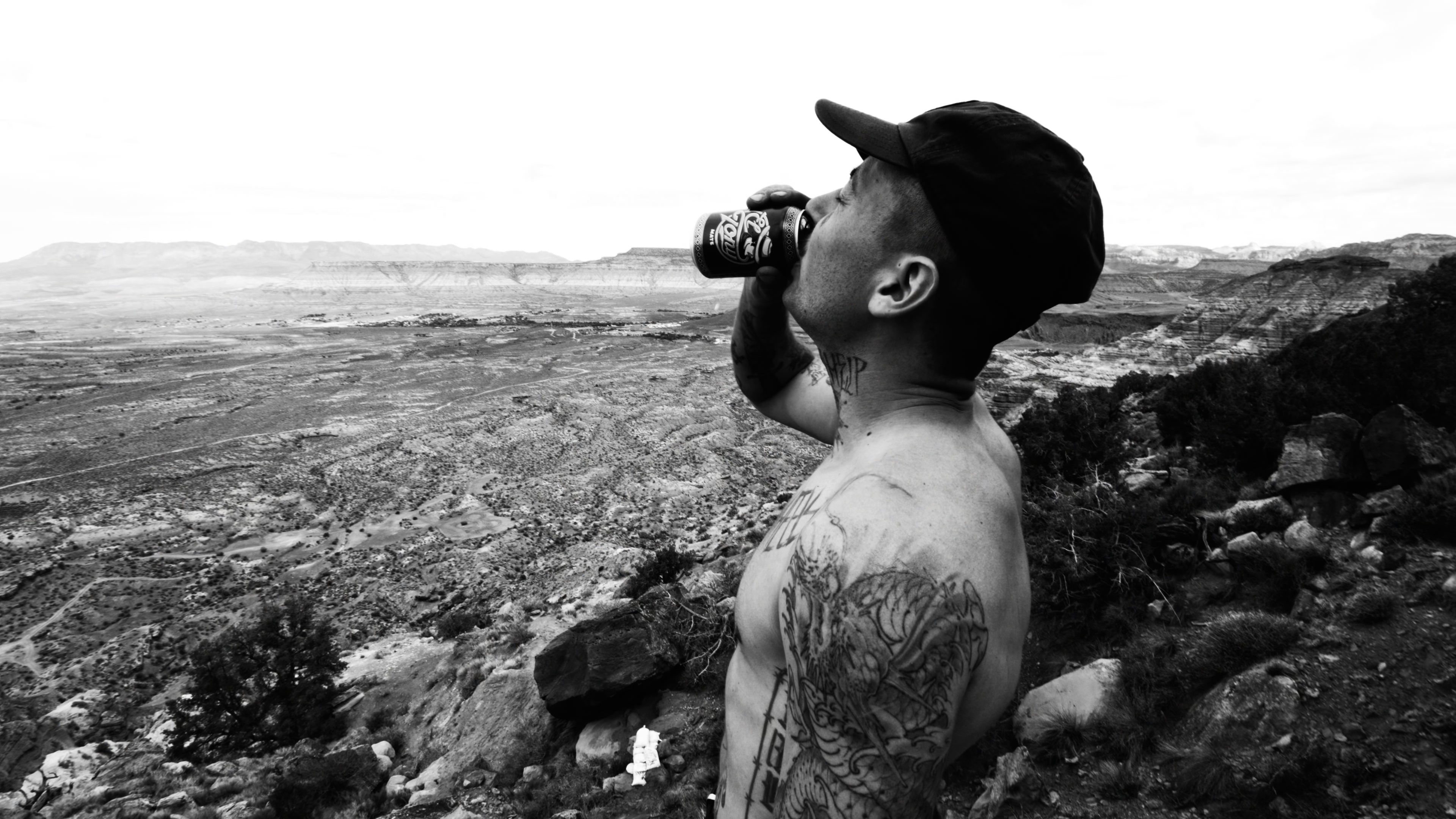
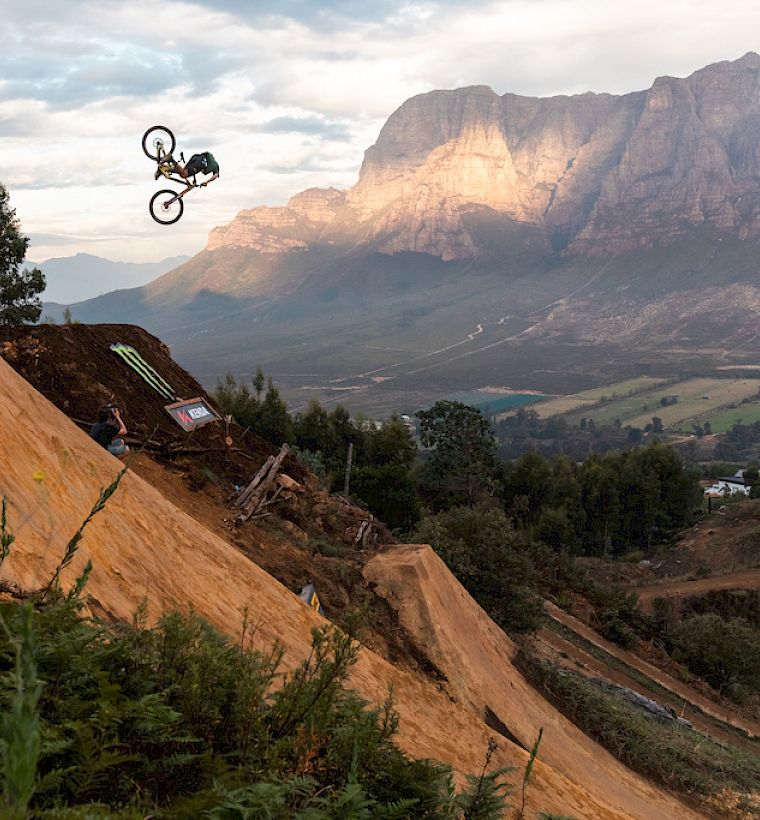
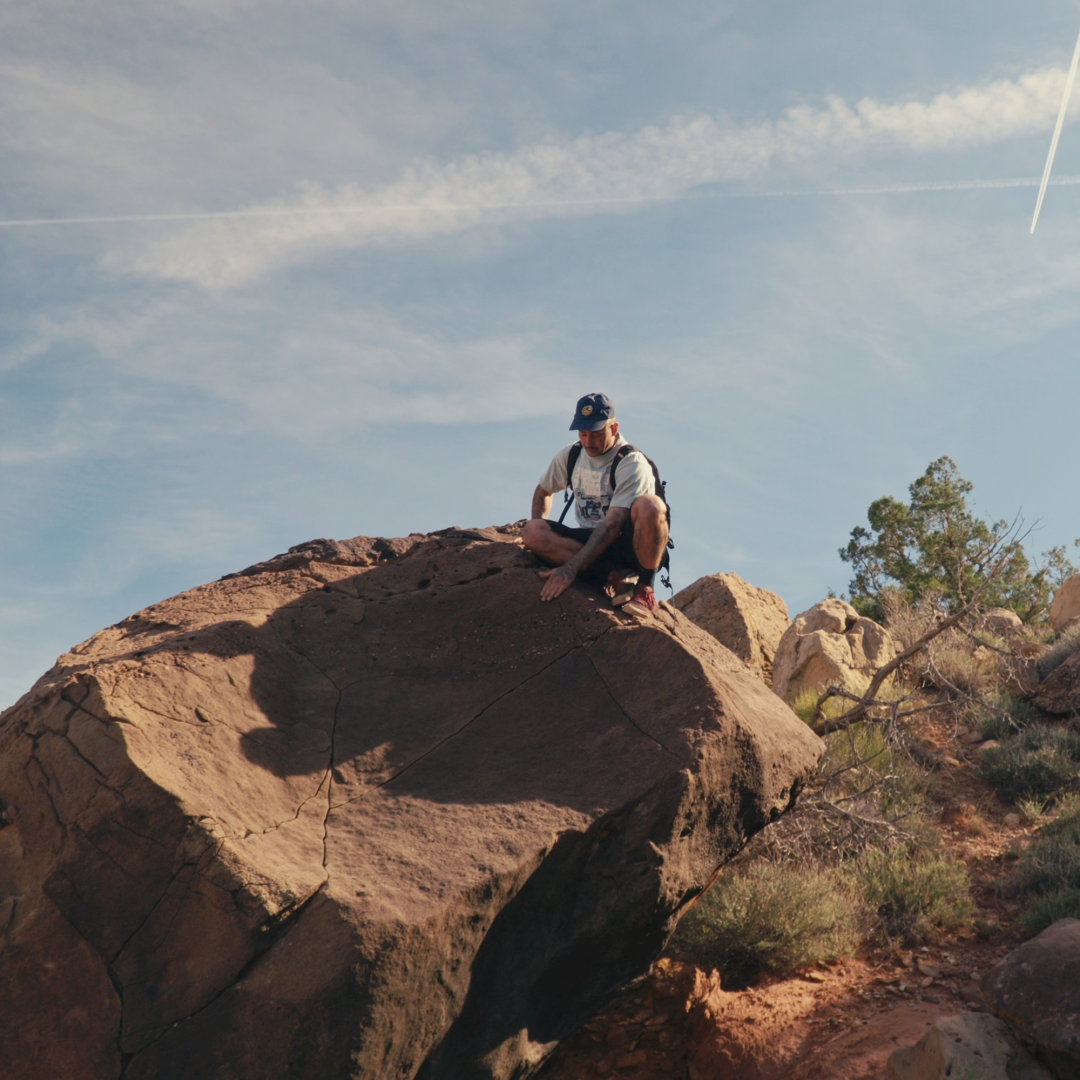
As a freerider, you know Utah because of Rampage, of course. It's one of those places that almost every rider wants to see at some point. The landscape, the size, these red and dark rocks, the open slopes - it's very special. There are no ready-made trails like you would find in a bike park. You have to read the spot, you have to understand where a line is possible and then you have to build it yourself.
That's exactly what interested me. Not just going there and making a clip, but developing something of my own. Finding a place that isn't already completely predetermined. Something that suits me and still looks like Utah. Everything is a bit bigger, rougher and more direct there. When you're there, you want to do exactly this freeride stuff.
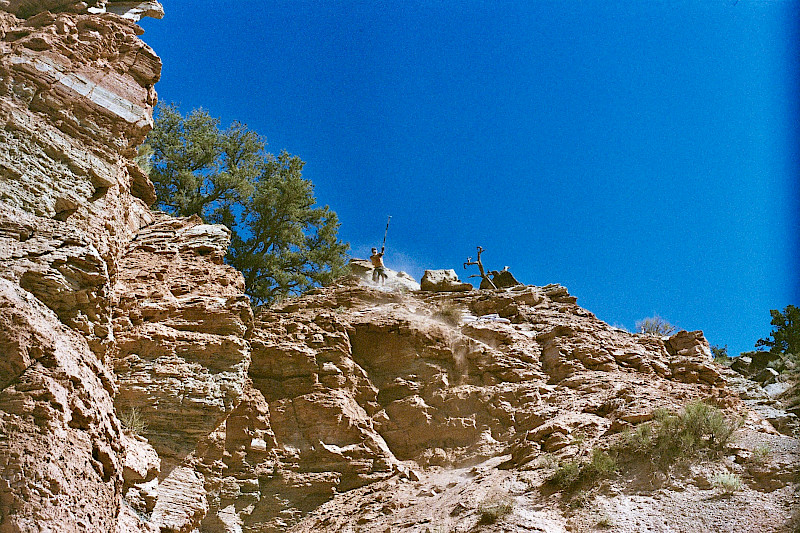
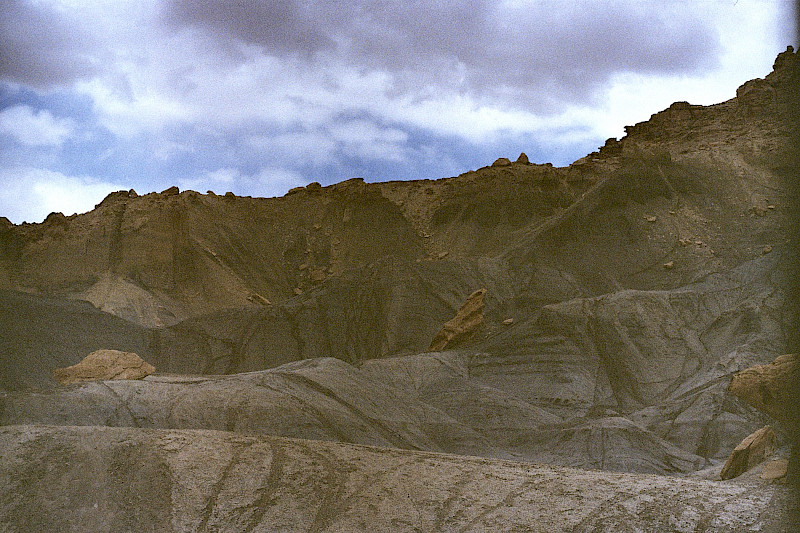
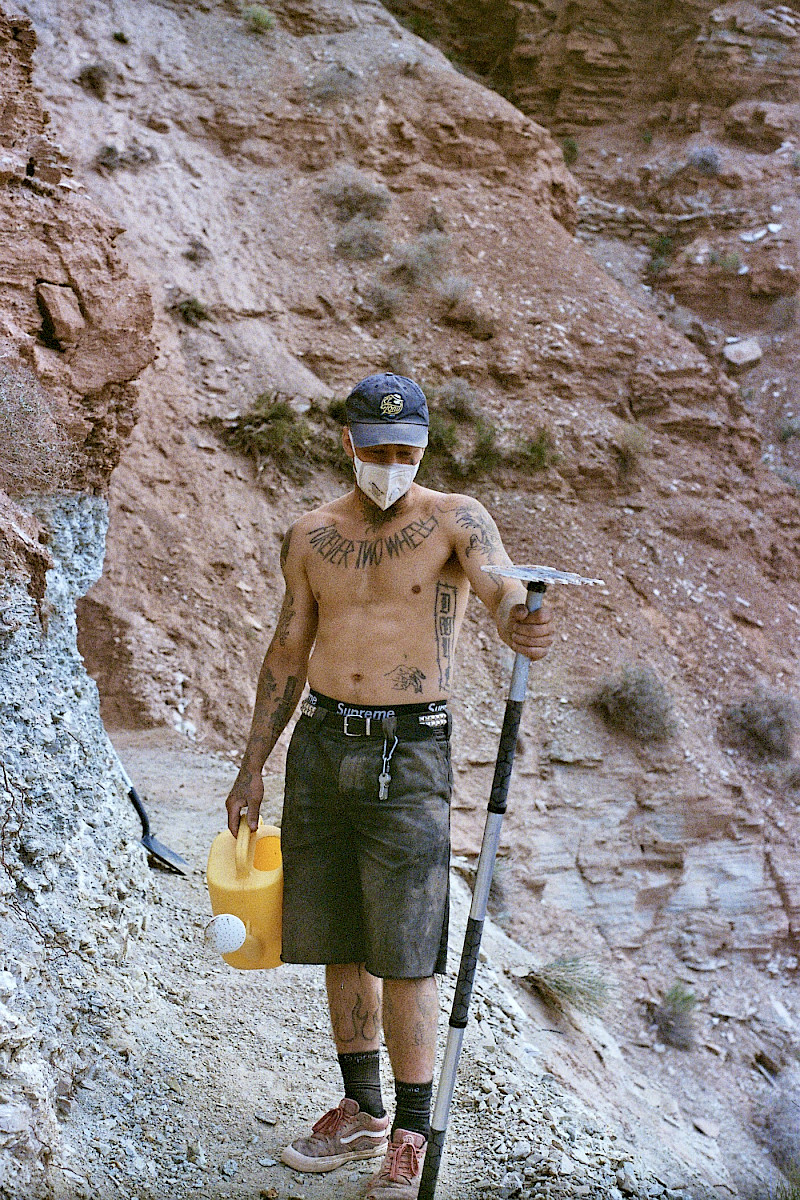
How much work goes into a line like this before you can even ride it?
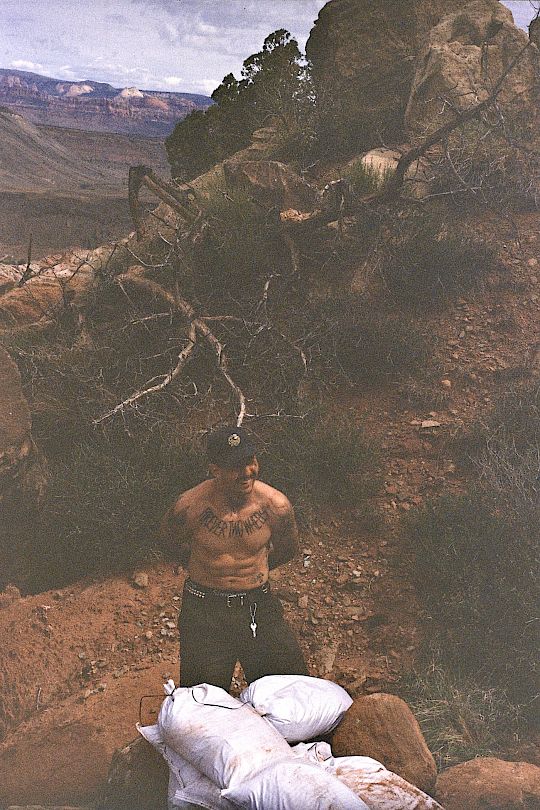
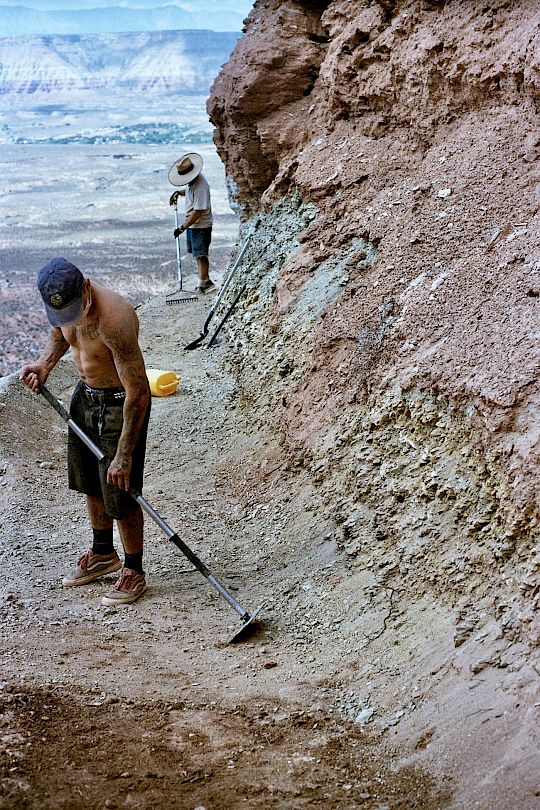
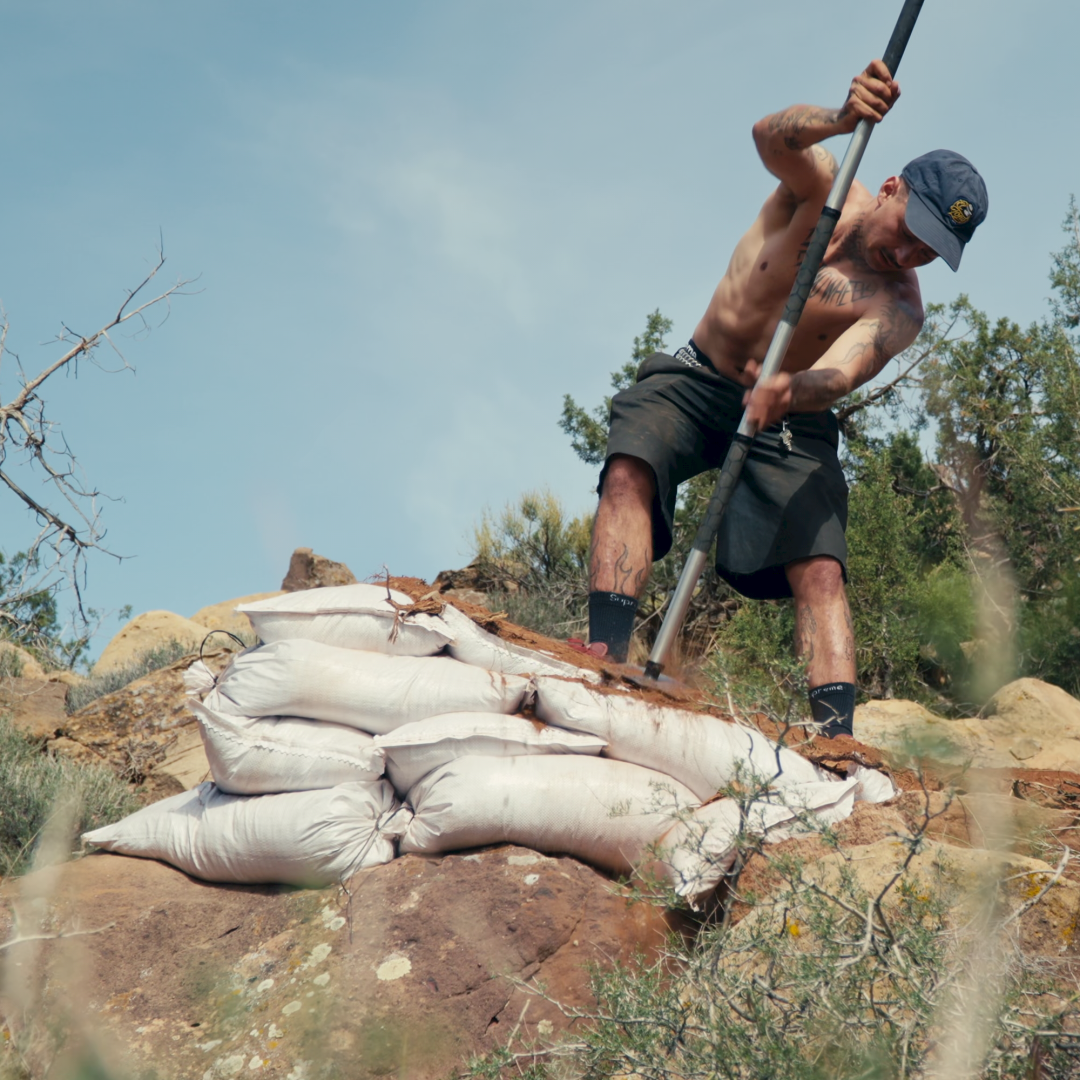
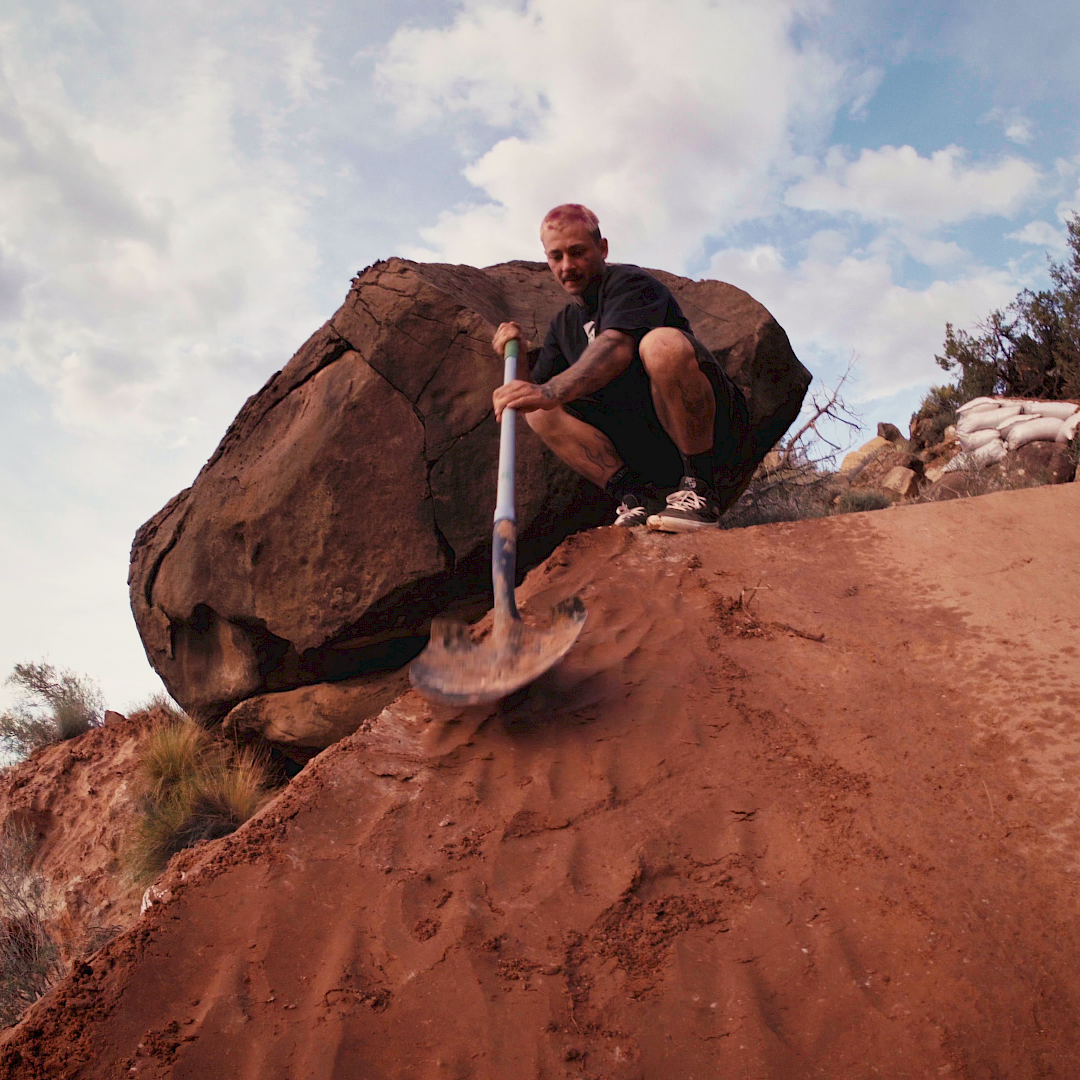
A lot. More than you probably see from the outside. In Utah, a lot of things just look natural and clean in pictures or videos. But until something is rideable, you have to shovel, shape and prepare a lot. The ground is very different to here. Much sandier, softer, drier. If there's no water, it's difficult.
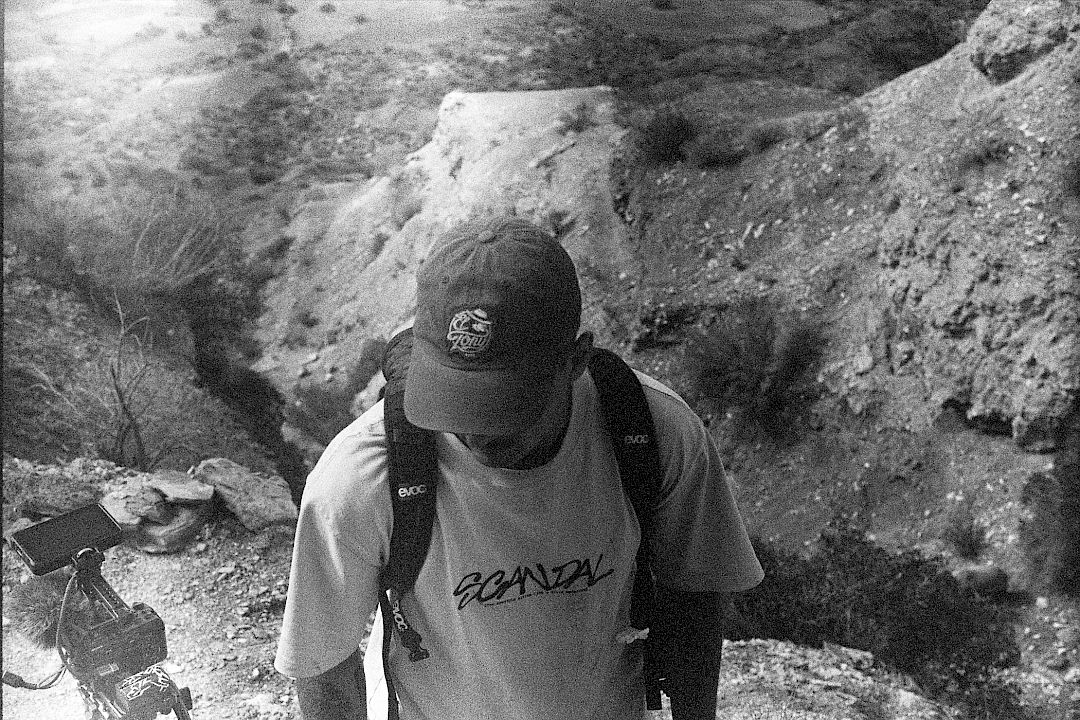
We carried a lot of water up every day, 30 or 40 litres, sometimes even more. That may sound like a small detail, but up there water determines whether you can work at all. If the ground is a bit damp, it's easy to mould. If not, it's just dry, dusty and tedious.
And the whole thing doesn't happen right next to the car. You walk up, you carry material, you shovel, you test, you reshape again. It's quite a hustle. But that's what makes it special. The line is more yours in the end because you didn't just find it, you really built it.
"It's a huge hustle to build something there
."
You had a list of ideas in advance. How did this line turn out in the end?
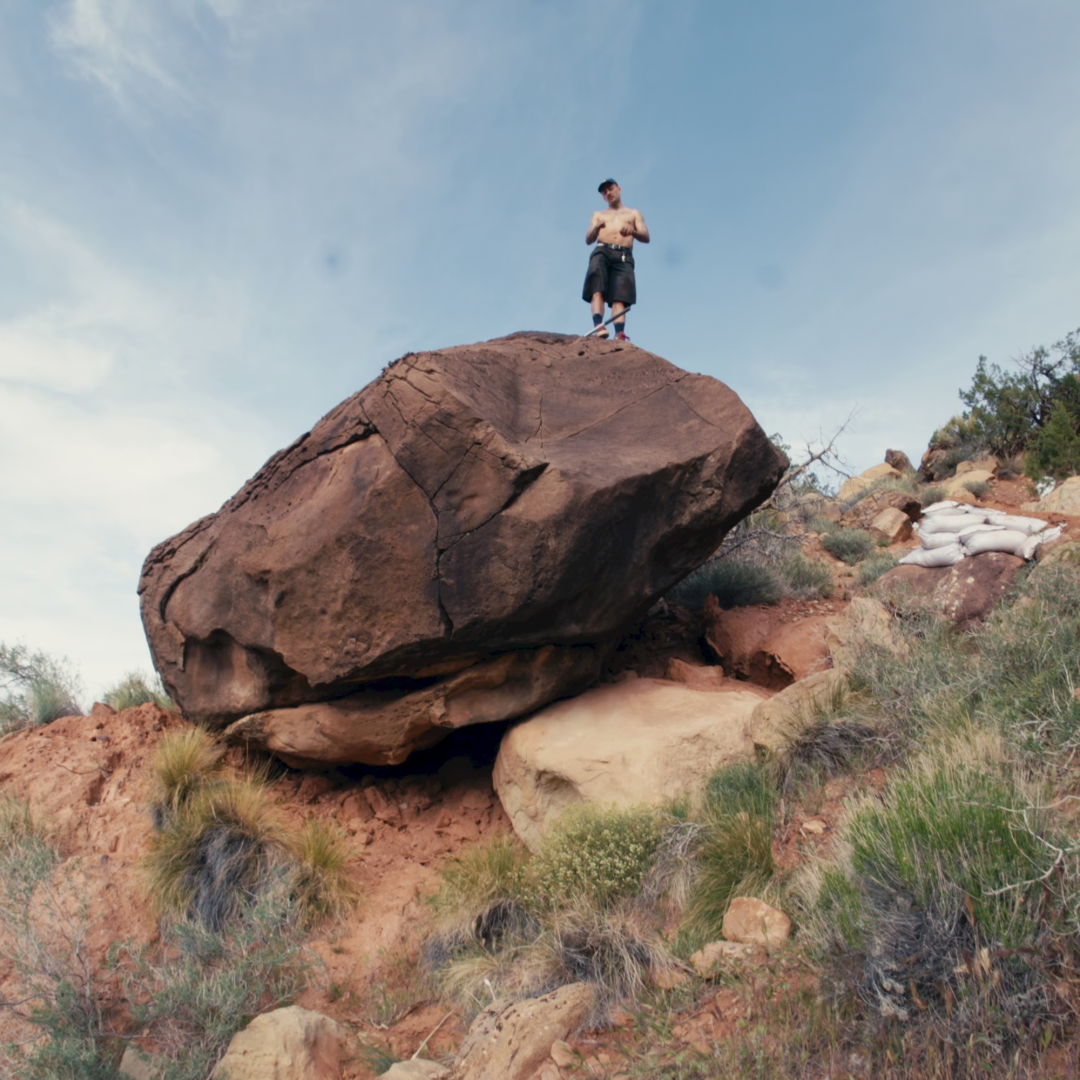
We actually had a list on our mobile phones. Ideas about what we could build, which features would be exciting, what we wanted to see. But then we set off on the first day and saw this black stone relatively quickly. And it was immediately clear: that's exactly where we had to start.
"WE HAD A LIST. THEN WE SAW THIS STONE AND KNEW: THAT'S EXACTLY WHAT WE WERE GOING TO DO."
From then on, everything happened quite naturally. At first it was this one stone. Then I saw another one further up. Then another one. And suddenly the whole line started to run through the landscape. It was no longer the case that we spent hours comparing spots. We saw this one spot and knew that we were staying there.
That was actually the beauty of it. You come with a plan, but it's the location that decides in the end. And if you see something that feels right, then you don't have to think twice.
Many people know you from events, big jumps and whips. What did you want to show with this project?
I think people mostly see jumps, airtime and event stuff from me. Of course, that's also because I post a lot of clips from contests or sessions. They're often about big jumps, style and tricks. But that's not all I ride.
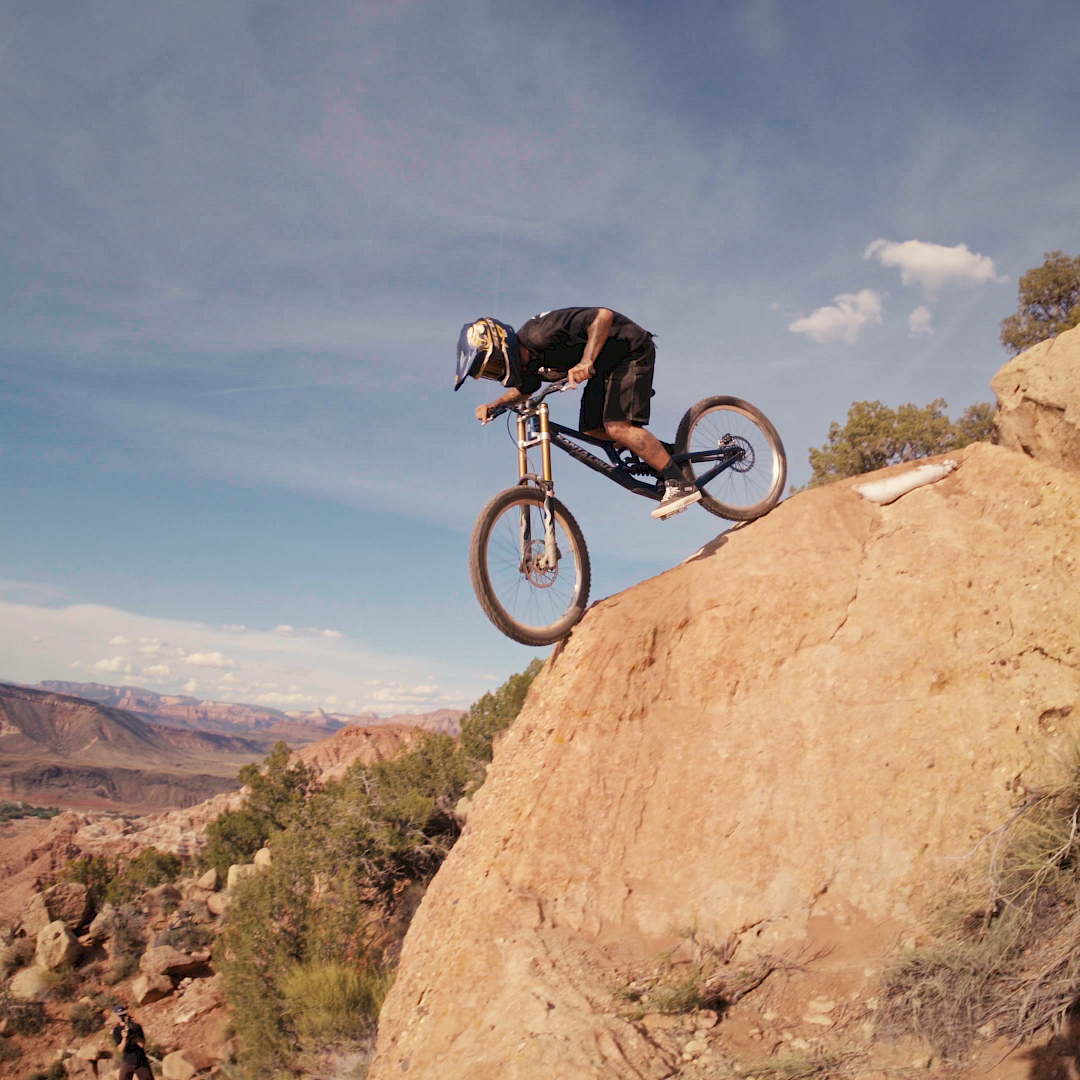
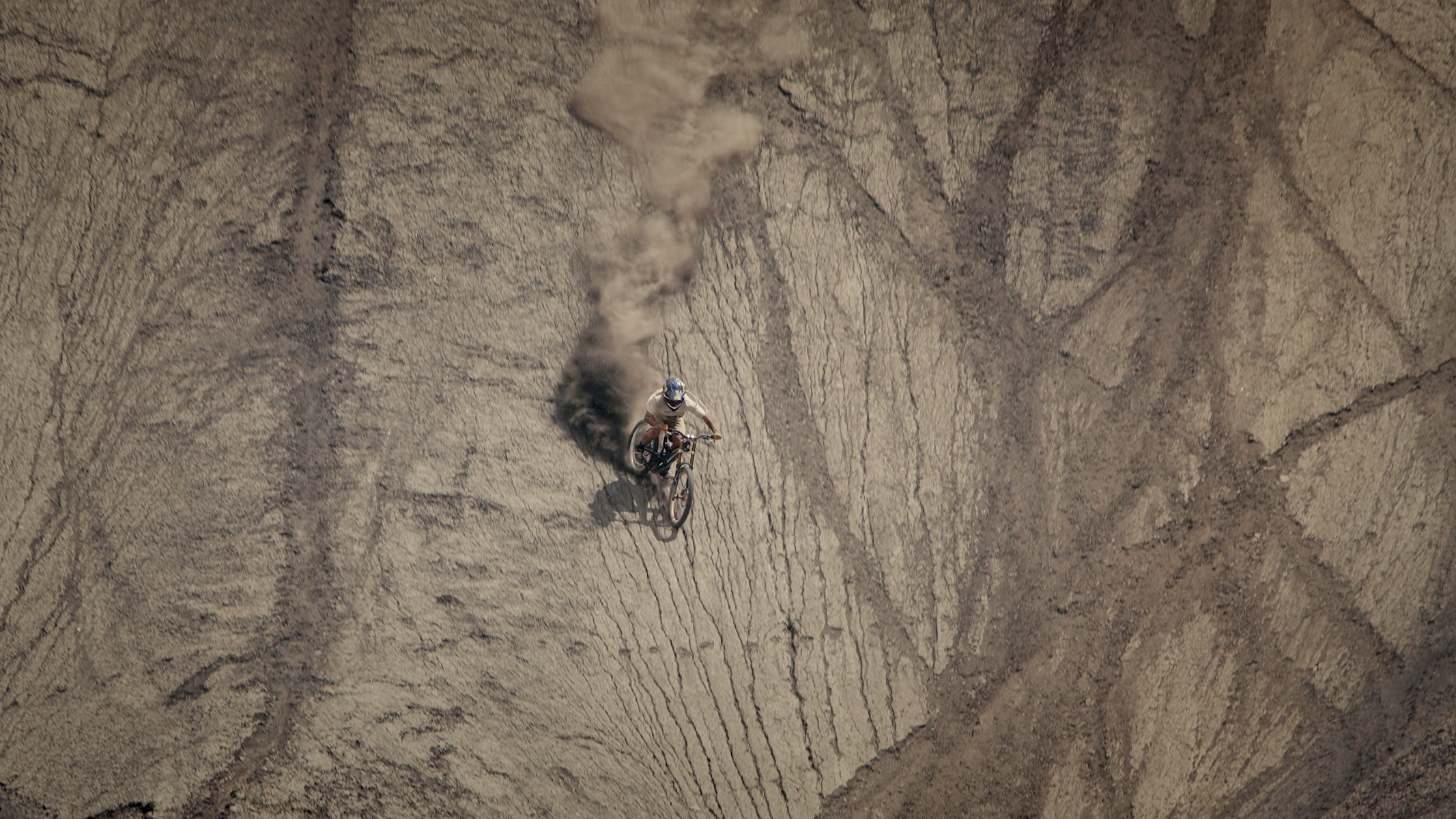
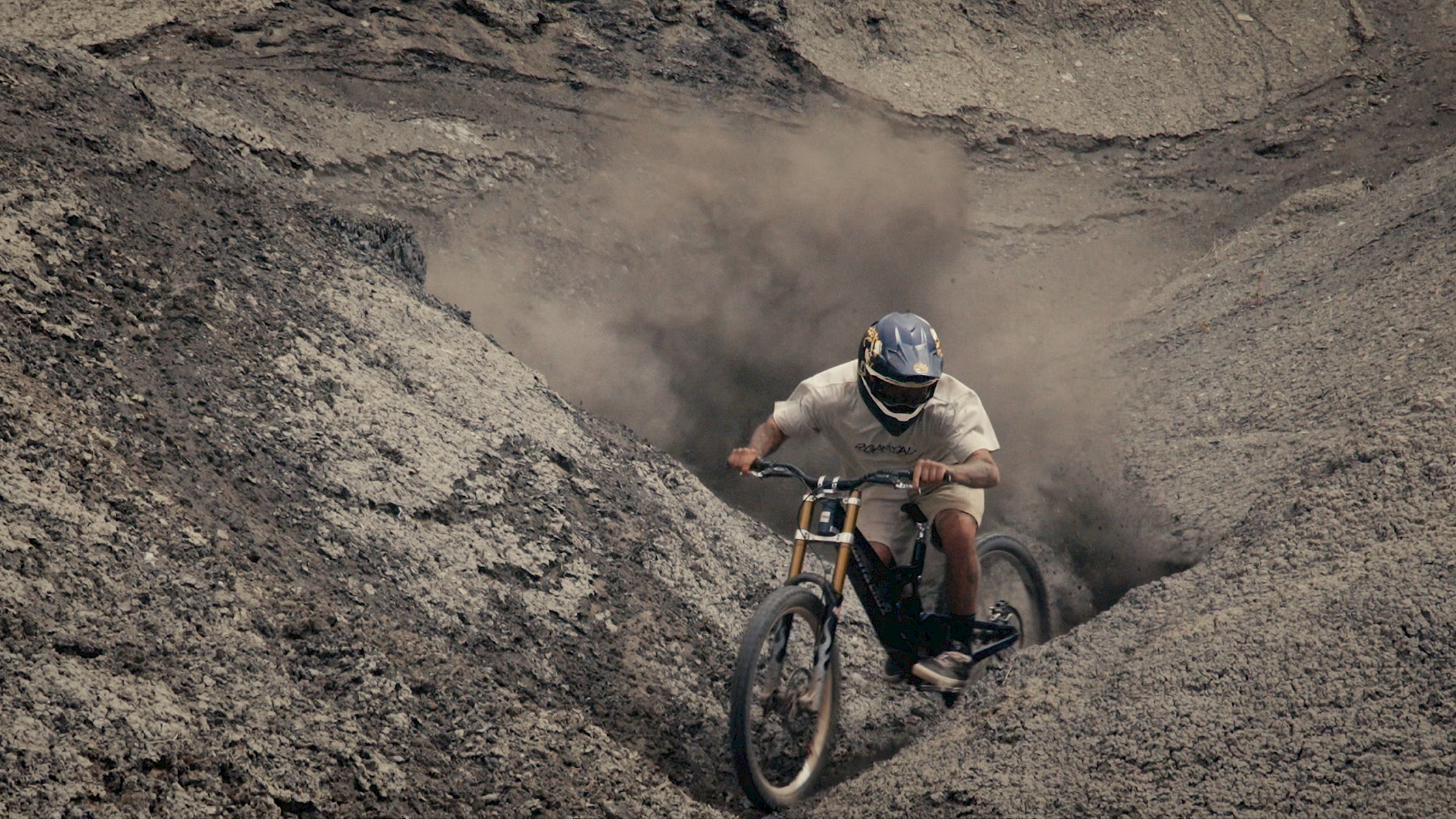
At home, I ride a lot of enduro and downhill. I like technical terrain, steep sections and creative lines. You just don't see as much of that from me. With this project, I wanted to show that this side is also part of me. Not just in the air, but also on the ground, over rocks, through difficult terrain, with a line that you have to read yourself.
Utah was perfect for this. When you're in a place like that, you don't just want to build a big jump and be done with it. You want to work with the landscape. You want to ride something that only makes sense there.
What was different in terms of riding compared to your previous projects?
It was less predictable. With a lot of jumps, you know pretty much what's going to happen at some point. You have a take-off, a landing, a speed. Of course it remains difficult, but you can estimate a lot of things very precisely.
It was different in Utah. The line had a lot more natural elements. Stones, edges, soft ground, places that feel different when riding than when looking at them. You have to react much more to the terrain. You feel the wind, you hear the bike, you realise on the jump whether the speed is right. And yet part of it remains a feeling.
That makes it exciting, but also sketchy. You can't control everything down to the last detail.
"At some point you have to know: It fits. Or not."
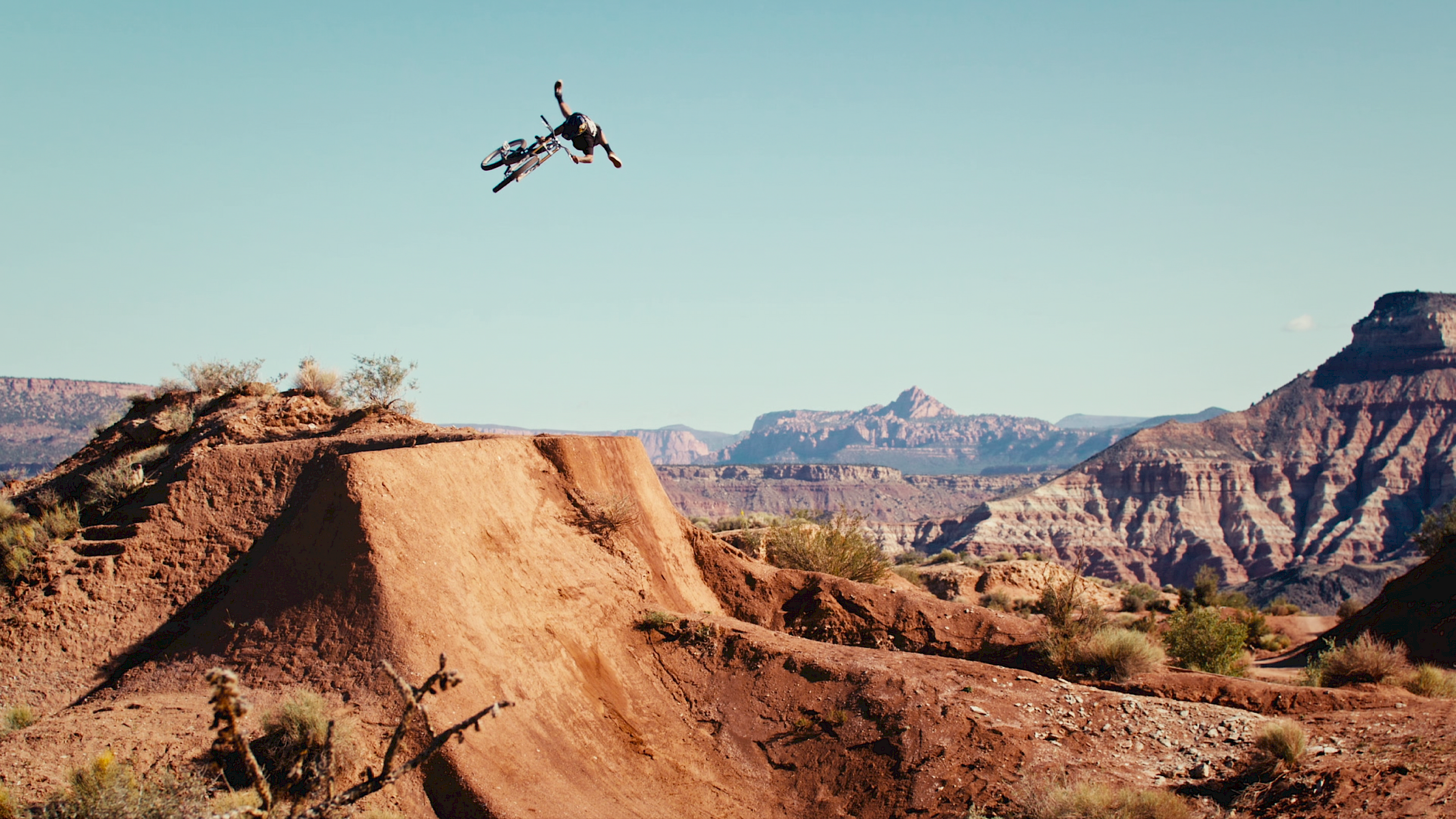
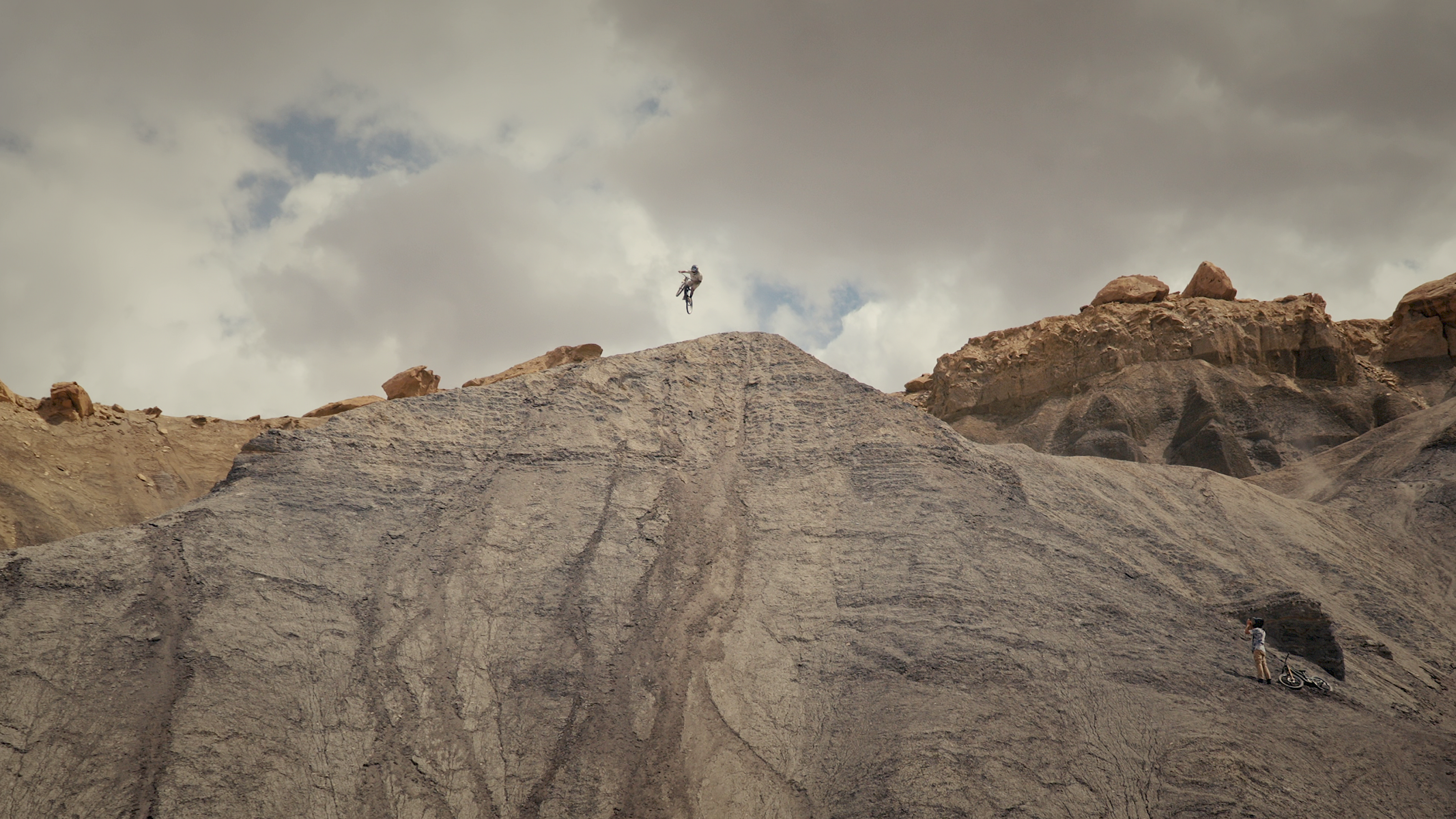
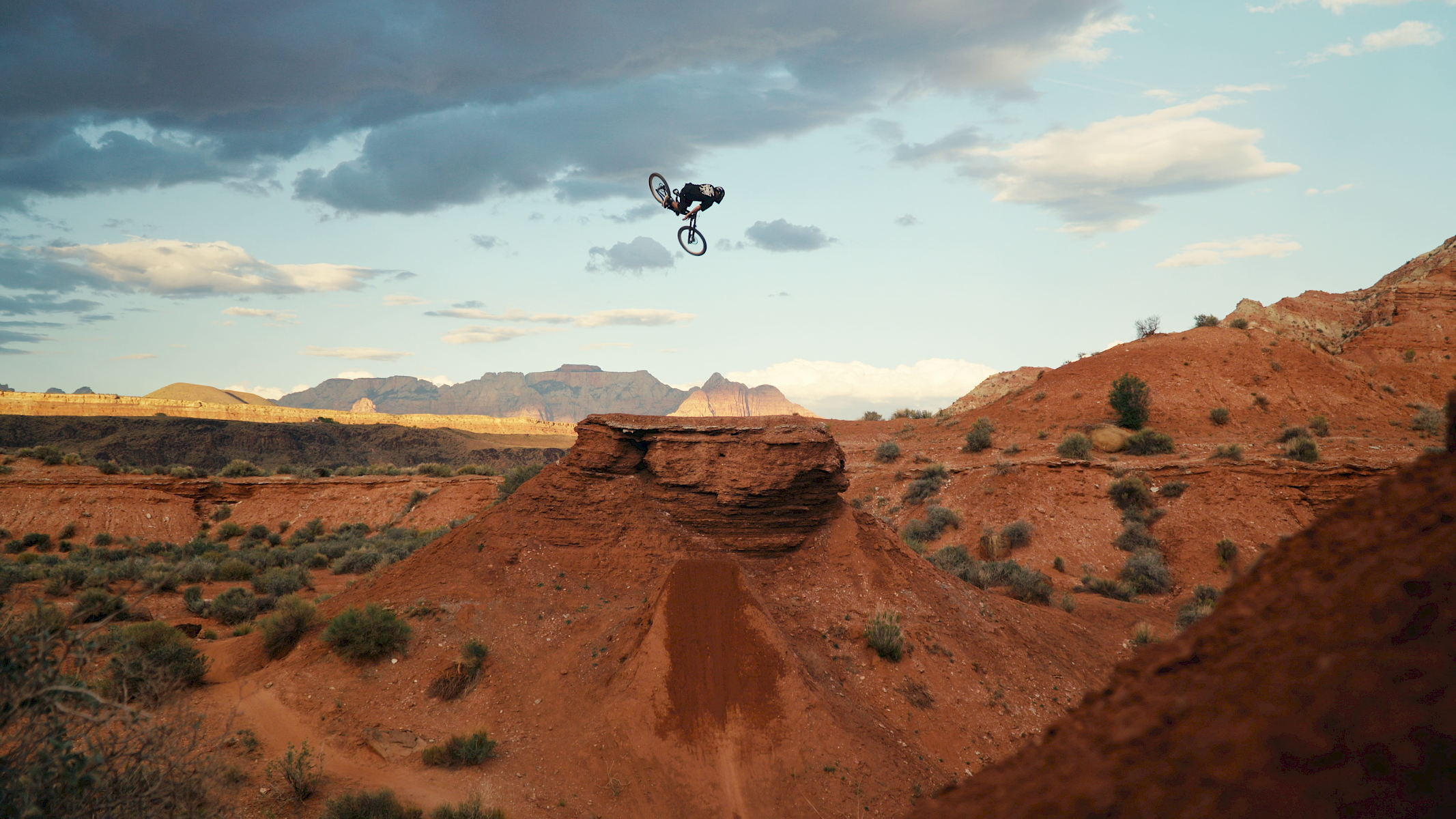

Was there a moment when you stood at the top and thought: I've never done anything like this before?
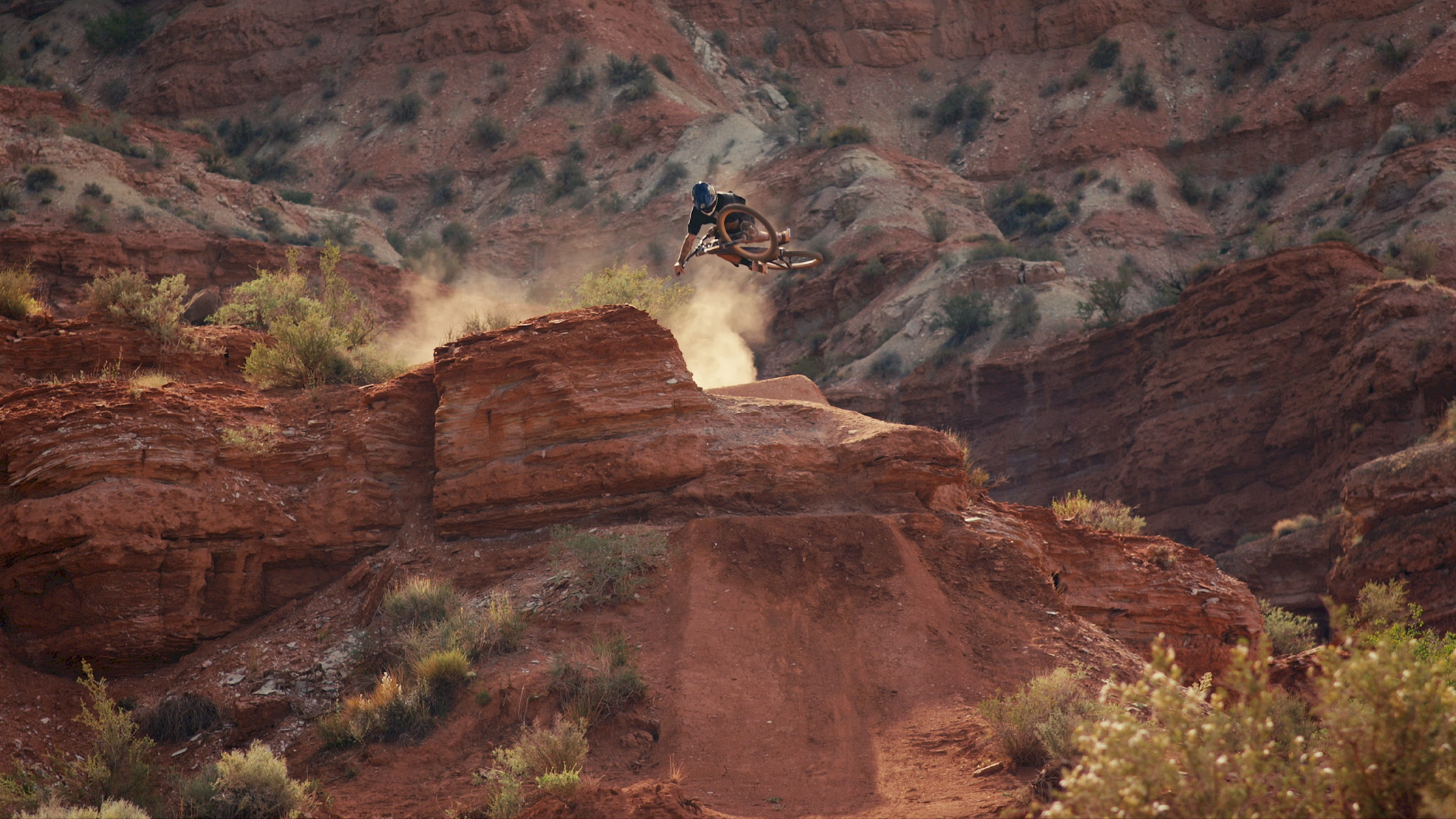
Yes, there was. It's not necessarily just the size of a feature. It's the overall feeling. You're in a place that you don't know, on a floor that behaves differently, with a line that you've built yourself. And then you stand at the top and know: now it all has to fit together.
I actually felt good before the Canyon Gap. I had respect, of course. But I wasn't completely insecure. On the contrary, I had the feeling that it would work. We had prepared the line, we had looked at how others had ridden there and I knew roughly what I had to do.
That's why the crash was so frustrating in hindsight. It didn't feel like something that was completely out of control. It felt more like a small mistake at the wrong moment.
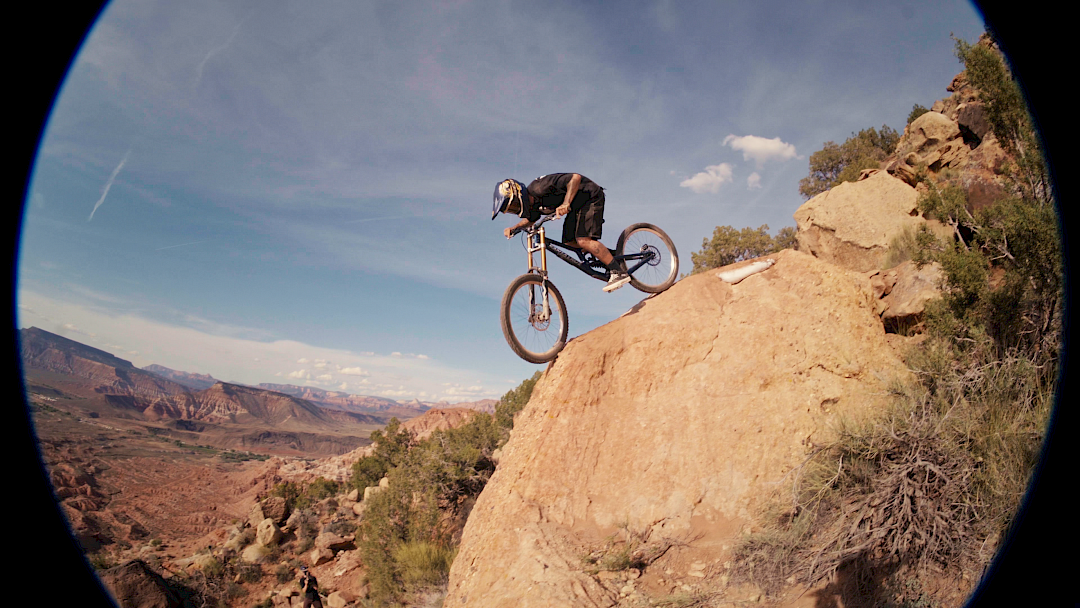
What happened?
I pulled over and for some reason braked slightly. Actually, I shouldn't have braked at that point. It wasn't much, but it was just enough that the speed was no longer right.
"I knew before I jumped off that I wouldn't get over it."
That's a very strange moment. You're still on the bike, but you already know in your head that it's not going to work. Then everything happens very quickly. Afterwards, I was lying on the ground and actually realised immediately what had happened. The first thing wasn't even the pain. The first thing was really: Why did I brake?
That really bothered me. Because a lot of things had worked well up until then. The line, the upper parts, the filming. We were actually at the point where we wanted to shoot the important things. And then the first big thing was the end.
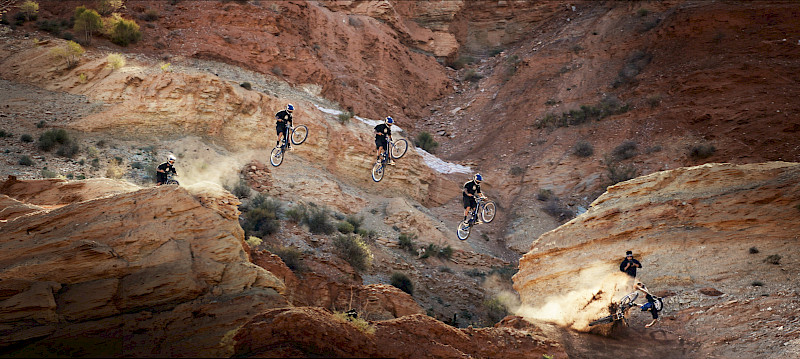
Did you realise straight away that the trip was over?
Not at first. At first I even thought about the bike. Whether it was broken. Whether it might be possible to try again. That may sound absurd, but you don't check everything immediately after a crash like that. I could still move everything and thought for a moment: maybe it will work somehow.
Then the pain came. And then I realised pretty quickly that it was over. We were lucky that Tylor James was with us. He knew the area and stayed calm. Without him, we would probably have been pretty lost. To be honest, we hadn't really thought about what would happen if something really went wrong.
That was certainly a learning experience. You're so focussed on the line, on building, on riding, that you don't always think through the consequences to the end. But in a place like this, you're far away. If something happens, it's not just like in the bike park, where someone is there straight away.
"This may sound absurd, but I was still able to move everything and thought for a moment: could I maybe try again..."
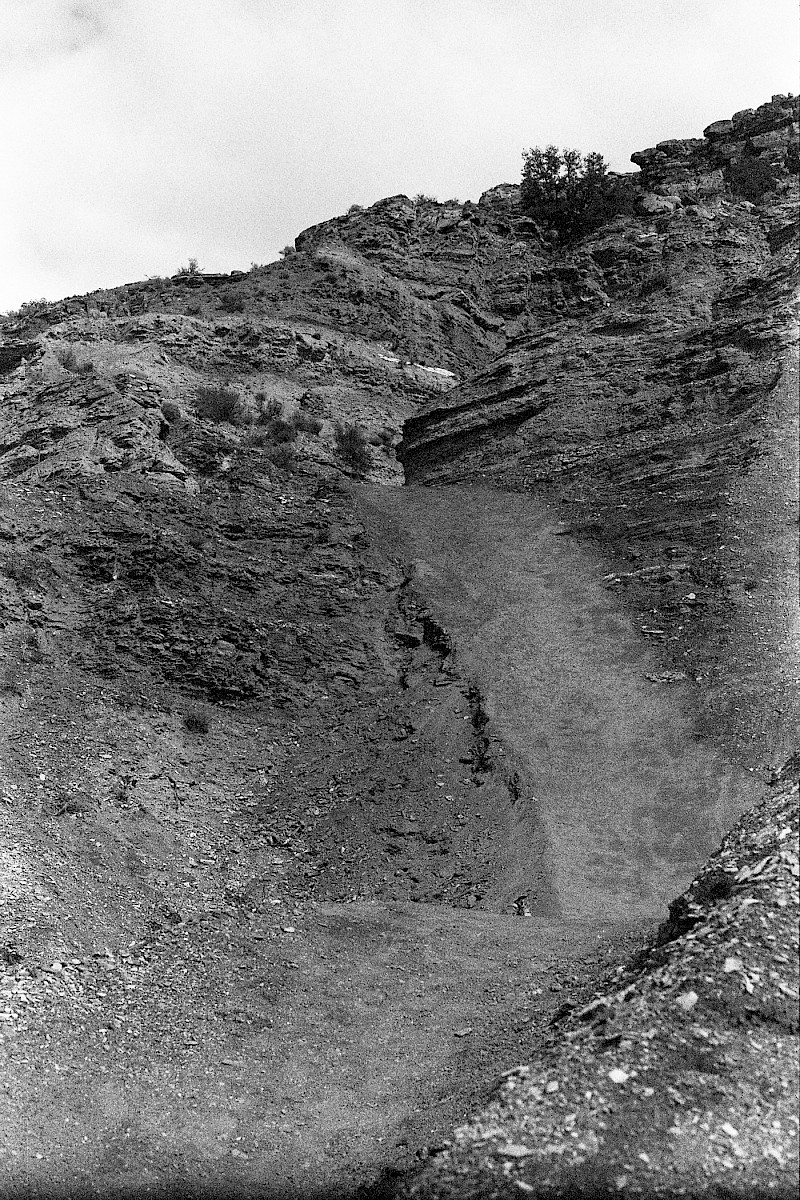
What happened afterwards?
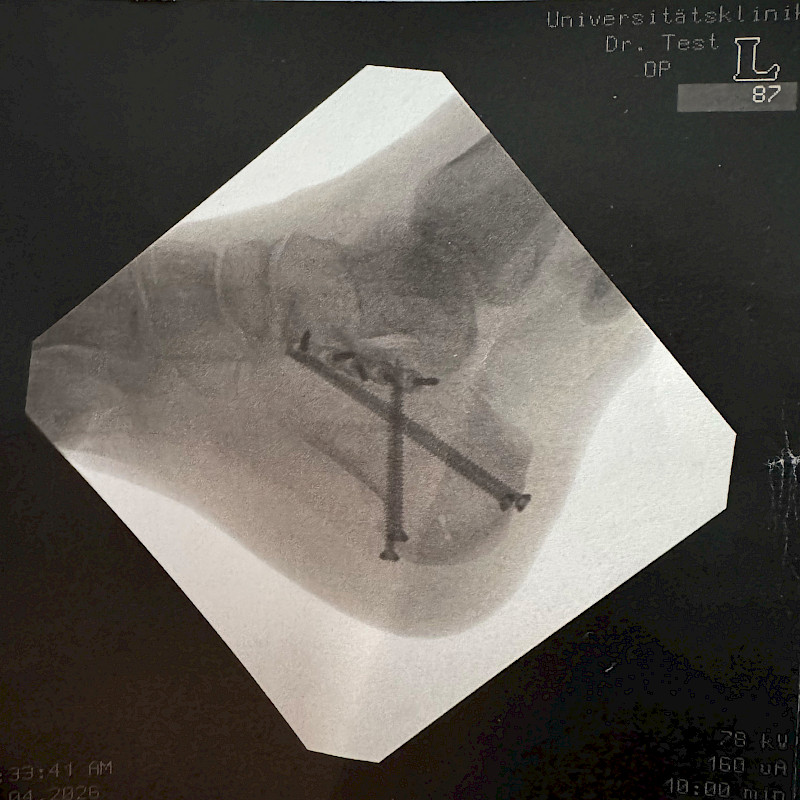
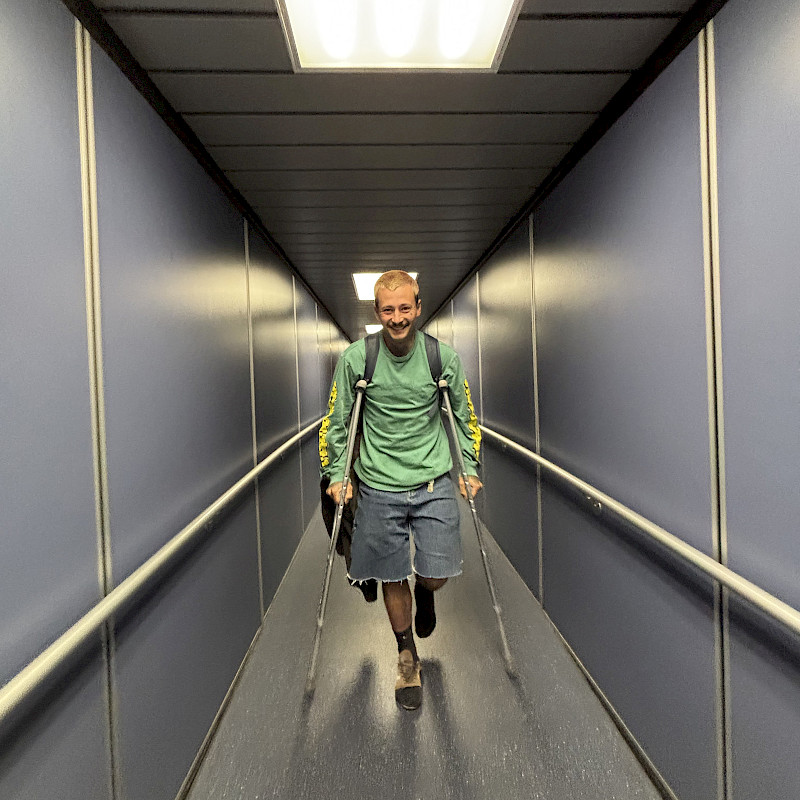
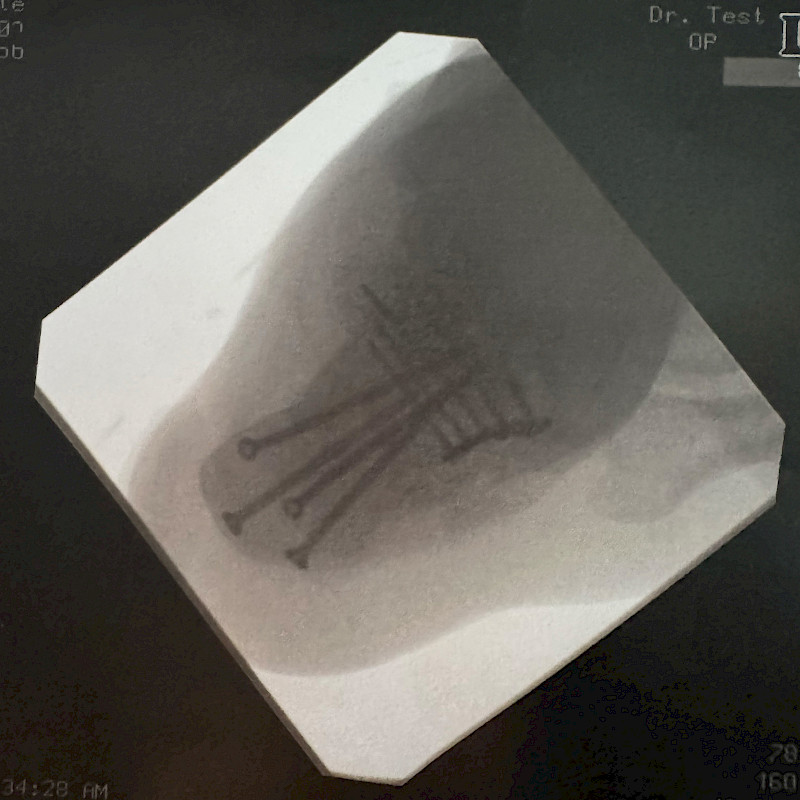
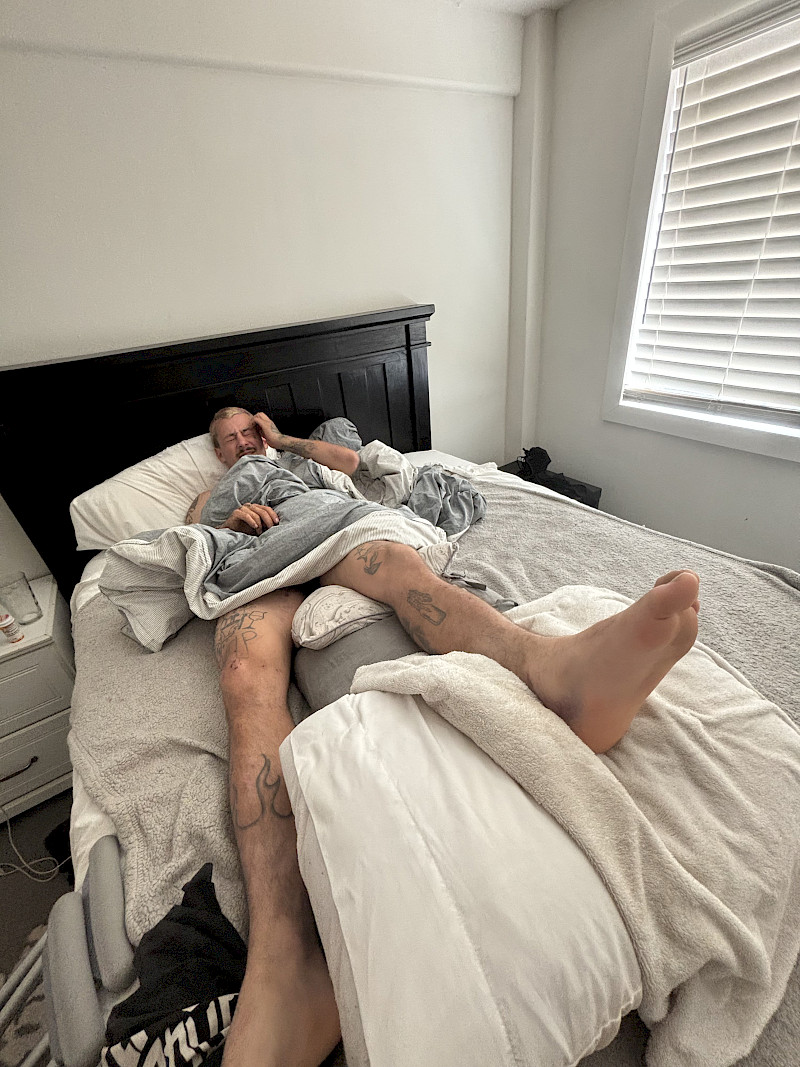
We first went to hospital in the USA. They said it didn't look too bad and could be treated at home. So we waited a little longer and then flew back. We even had a stopover in Chicago on the way home. My father picked me up in Zurich and from there we went straight back to the hospital.
There they did a CT scan and said that it was much more serious. The doctor basically said that the assessment in America wasn't really correct and that I needed an operation as soon as possible. So I stayed and was operated on shortly afterwards.
Of course, that wasn't the plan. But in hindsight, I have to say that it could have turned out worse. It was a stroke of luck. The crash was hard, the trip was over, but it was nothing that was going to stop me in the long term.
Still, it doesn't sound like you've finished with Utah.
No, not at all. I actually wanted to go back straight away. The thought was still there in hospital: I want to do it again. Not necessarily mindlessly or immediately, but simply because everything had worked well up until the crash.
That is perhaps the frustrating thing. If a project doesn't work right from the start, you might find it easier to accept. But here we already had a lot of material, the line was working, the spots were strong, and then it ends because of a mistake in one moment. That's why it doesn't feel finished.
For me, Utah is more something I want to go back to. Big Water in particular was rad. If you had two or three weeks there with a good crew, you could build something really strong. This project was perhaps the first step.
What remains of 84779?
For me, the experience remains above all. Finding a line yourself, building it yourself, riding in this landscape, travelling with a small crew. It's different to an event or a classic video shoot. It's much more direct. You're outside all day, you shovel, you discuss, you wait for wind and light, you try things out.
And the realisation remains that such projects cannot be completely planned. You can make a list, you can prepare spots, you can think about what you want to film. But in the end, it's the location, the weather, your feeling on the bike and sometimes a single moment that decides.
I think that's what makes Utha 84779 special. It's not a perfect project in the classic sense. It's raw, it's honest and it shows something that doesn't look finished. But maybe that's the point.
"84779 doesn't feel finished. It feels like the beginning of something bigger."