
A mountain bike film set against the rugged landscapes of Andalusia
A Fistful of Tapas follows Vitor Büchli and Chris Visscher as they search for authentic lines.
A film by Andoni Lopez, with music by THE RULE
A dusty mountain bike Western-style project from Andalusia.
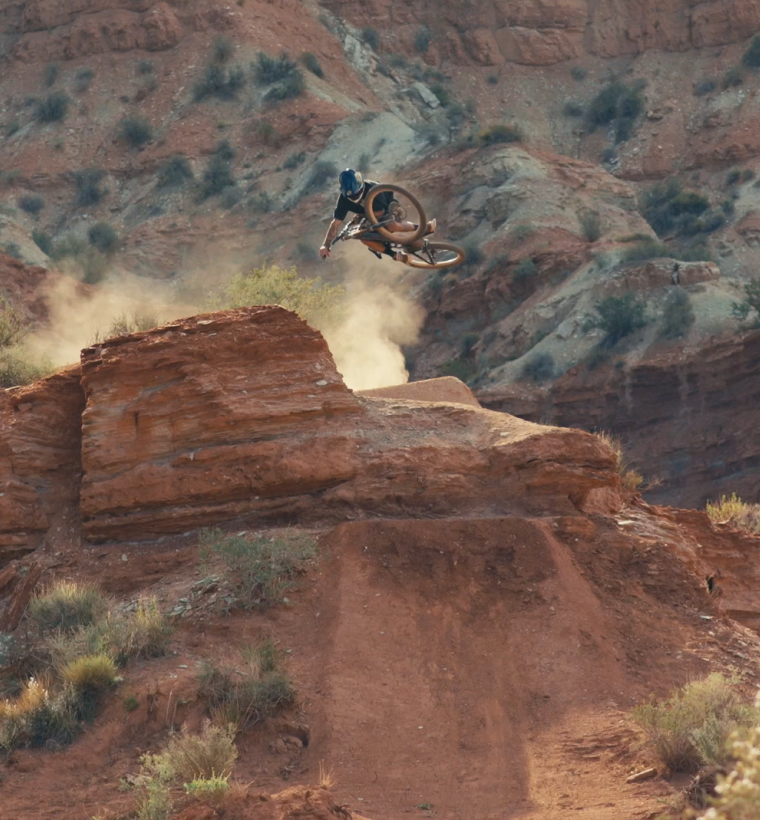
"A Fistful of Tapas" is not your typical bike edit. The film began as a small, gritty mountain bike ‘western’ project: with a backstory, a location that wasn’t easy to control, and two riders who had to find their lines first before they could ride them.
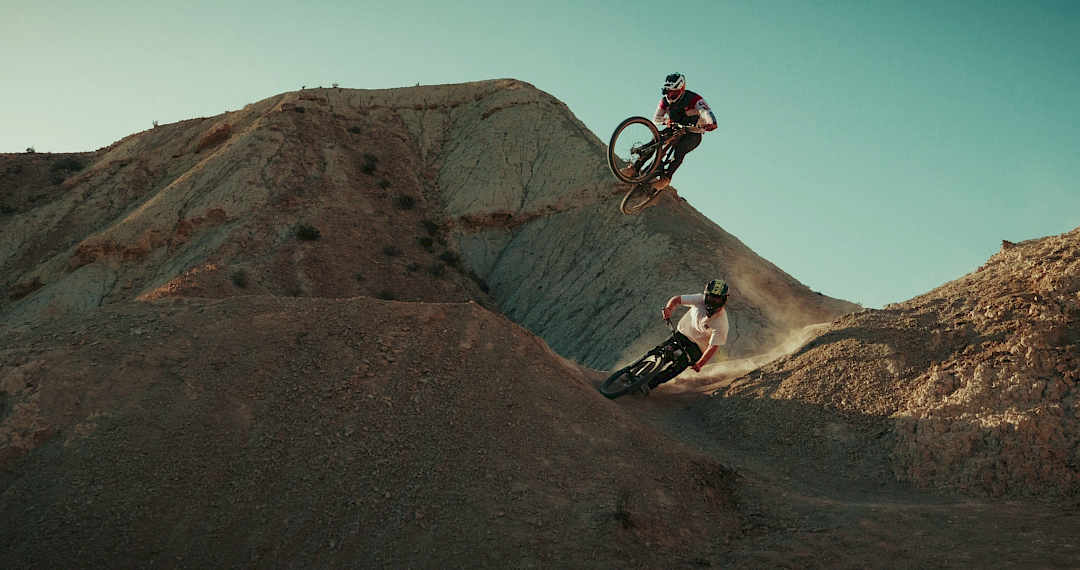
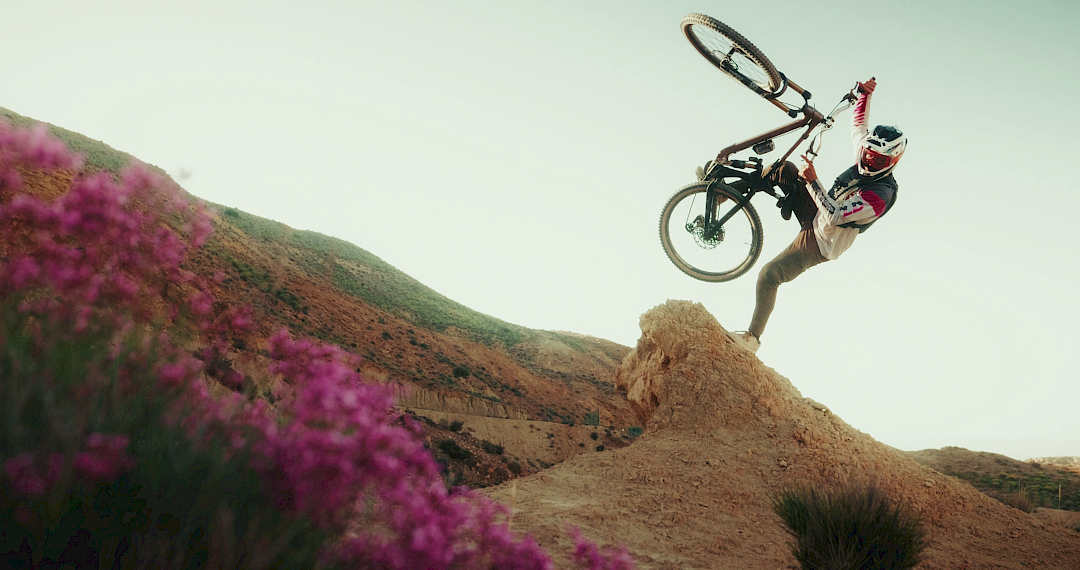
Filmed in the rugged landscapes of Andalusia, the project – featuring Vitor Büchli, Chris Visscher and filmmaker Andoni Lopez – brings together riding, shaping, scouting and cinematic storytelling. A film about lines that weren’t simply there. Instead, they were analysed, discussed, discarded, adapted and eventually ridden.
Interview: David Kurth
Photos: Andoni Lopez

Andoni, lots of bike edits kick off straight into the action. What did you want to do differently with A Fistful of Tapas?
Films like “Seasons”, “Life Cycles”, “ROAM” and so on have always impressed me, and I miss that sort of film. They have a sort of story running through them, a concept, a common thread, a vibe. They trigger a certain feeling in me. I didn’t just want to make a bike edit where you jump straight into the riding, wait for the beat to drop, and then the action just kicks in. There are plenty of videos like that. They work, but I often find they lack a story.
For me, it was important that the film had a central theme. A beginning, a development and an ending. Not just riding, but atmosphere too. You should really feel the place. The landscape, the light, the dust, the waiting times, the uncertainty before tackling a line. For me, all of that is just as much a part of the film as the actual run itself.
I think that especially today, when many videos are scrolled past after just two seconds, we need projects again that keep you watching for longer. Something that isn’t just consumed quickly, but works like a short film.

The project seems very closely linked to the location. Why Andalusia in particular?
Andoni: I live in Switzerland, but I have Spanish roots. My relatives come from this region, and I often spent my holidays there as a child. I remember those dry hills, the landscape, and also old photos of me in Western-style clothes. Somehow, that’s always stayed with me.
When I later started filming, this idea kept coming back to me: one day I’d like to shoot my own project there. Not just anywhere in Spain, but in exactly this kind of landscape. Visually, it offers so much that you hardly need to invent anything. The light, the dust, the vastness, the rugged hills – it all already has a cinematic language of its own.
“THIS LANDSCAPE HAS BEEN IN MY MIND SINCE MY CHILDHOOD. FINALLY FILMING MY OWN BIKE PROJECT THERE FELT SPECIAL.”
We’d been thinking about, pitching and developing the project over several years. The fact that it’s now become a reality with El Tony Mate was really special for me. It wasn’t just a job, but a project that had been in my head for a long time.

If the place meant so much to you personally, how did you decide to what extent the landscape should feature in the film?
Andoni: It was clear to me right from the start that the landscape couldn’t just be a backdrop. It had to become part of the film. This place has so much character that it would have been a shame to use it merely as a backdrop for riding shots.
What many people don't know is that this region served as a filming location for parts of Lawrence of Arabia, A Fistful of Dollars, Indiana Jones, and many other classics. Sometimes we forget how much Europe has to offer. That's why you don't always have to travel far to discover something special. Some of the greatest gems are closer than you think. The landscape sets the rhythm. It determines where you can ride, how you film and what atmosphere is created. You can’t just set up a feature there and say: ‘Right, that’ll do.’ The place has a say in it. That’s exactly what interested me.
I wanted the film to convey just how vast, arid and raw everything is. Not just in the action shots, but in the moments in between as well. That calm before a run, waiting for the light, the dust after a landing – that was just as important to me.

Vitor, when you look at this landscape, it seems almost boundless. What was it like for you to find a line there at all?
Vitor: I found it extremely difficult to focus. You’re there and you just see possibilities everywhere. Every slope, every edge, every little feature in the terrain can suddenly become a line. It feels like a huge playground.
But that’s exactly what makes it difficult. You can’t build everything, ride everything or pursue every idea. We only had a limited time there, so you have to decide: where is it really worth the effort? What’s safe enough? What just looks good from a distance? And where might we be wasting too much energy?
“It was like a massive playground. But that’s exactly what made it difficult: you can’t build everything, ride everything or try everything.”
I think that was almost harder than the riding itself. Not riding a single line, but choosing the right one from a hundred possible lines.
With so many possibilities, how did you decide which lines really made sense?

Vitor: Chris certainly had more experience than me in that regard. He’s got that builder’s eye. I often just saw possibilities everywhere. Chris was much better at assessing whether something was really worth it or whether it would end up being too much effort.
He’d say: ‘That might work, but we’d have to dig here, stabilise there, and change the approach over there.’ Or he’d spot straight away that a line might look good, but would be too risky or too labour-intensive. That helped us a lot, because otherwise you can very quickly end up investing a lot of time in the wrong things.
That was important to me because I tend to see the potential. Chris also sees what’s needed to make that potential actually rideable.

Chris: If you’ve spent a long time shaping in bike parks, you look at a terrain differently. You don’t just think, ‘That could look cool.’ You also ask yourself: Where does the speed go? What’s the landing like? How much do you need to build? Is it safe? And does the line feel natural at the end?
With terrain like this, you mustn’t try to fight it too hard. If you have to force a line, it usually doesn’t turn out well. The best lines emerge where the terrain already gives you a hint of what’s possible, and you just have to read it and shape it a little.
“A good line isn’t just created by building. It’s created by understanding what the terrain actually allows.”
Once you’d decided on a line: how did the ground feel whilst riding?
Vitor: The ground was really unusual. It wasn’t just a loose sandy slope where you can brake anywhere. The top layer was quite hard, almost like concrete. But on top of that was a loose layer, and that’s exactly what made it really sketchy at the start.
On the first few runs, you had very little grip. You’d hit the slope at speed and could hardly brake at all. You just had to hope it would hold and that you’d somehow hit the line cleanly. That felt very unfamiliar at first.
But as soon as that hard layer had broken up, the grip came. After a few runs, the line suddenly got much better. You could jump higher, ride more cleanly and trust the ground more. The line actually had to open up first.
Did this terrain also mean you had to scrap some of your ideas again?
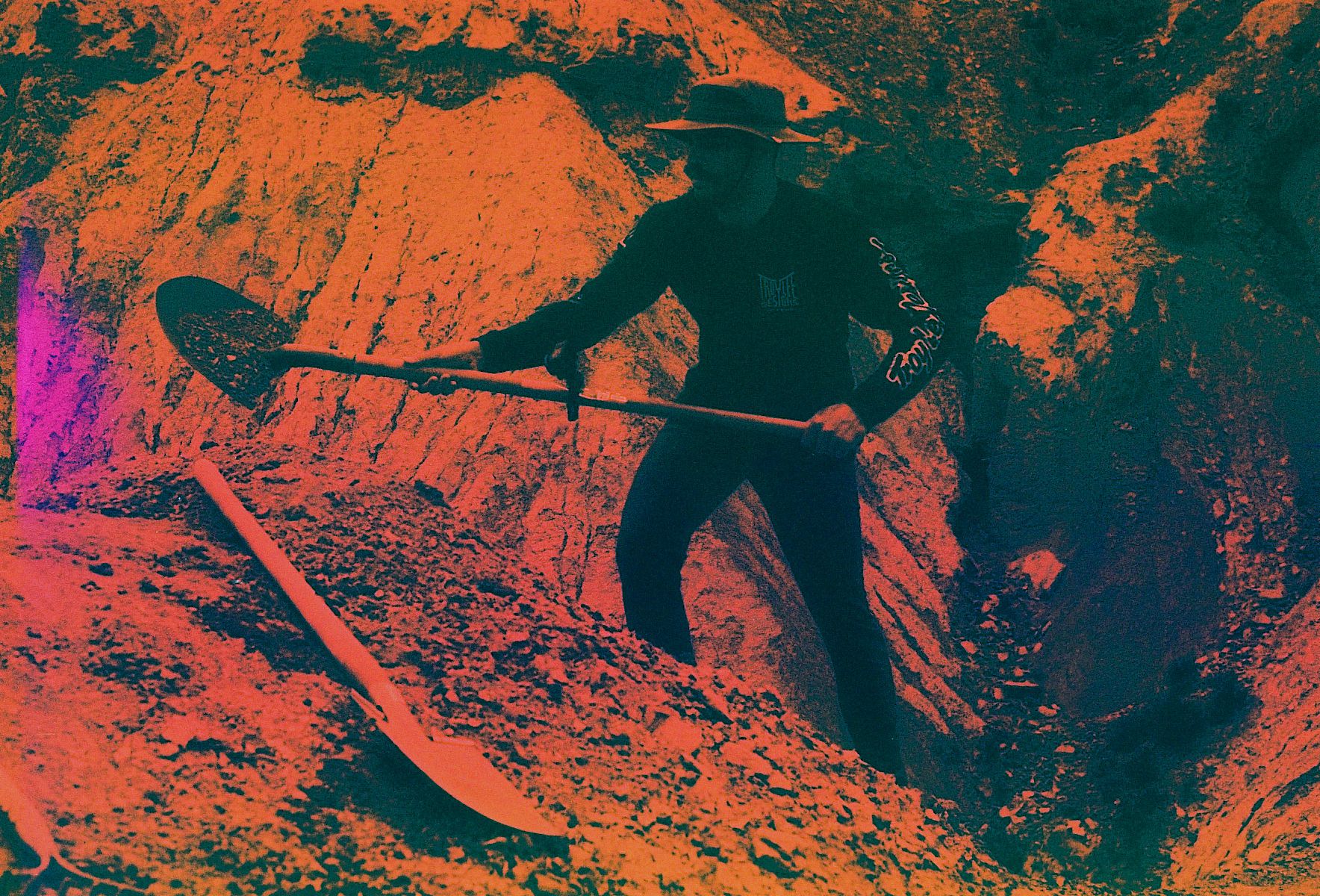
Vitor: Yes , definitely. We found one jump. Chris spotted it whilst scouting. He saw a track somewhere on a slope, went to have a look and suddenly there was this jump. But the rest wasn’t just there. We had to build, dig out or adapt a lot of it ourselves.
There was also one feature we spent a day and a half on, which we didn’t end up riding. The idea would have been really cool: a fast run-up, a wall, a sort of quarter-to-bank, plenty of height – something completely different for the video.
But in reality, after a few centimetres of sand, there was rock straight away. We would have had to spend an ages chipping away at it. On top of that, there was the time pressure. At some point, we had to be honest with ourselves and decide whether it was really worth it. In the end, it was better to put our energy into other lines.
It was a shame, because it would have looked really impressive. But that’s just how it is in natural terrain. Not every idea that works in your head actually works on the ground.





So you had the terrain, the ground conditions and time pressure. Was there anything else that threw a spanner in the works?
We had several days of rain, of all places there. In a region where it doesn’t actually rain very often. At first, that was difficult, of course, because you immediately feel like you’re losing time. Chris was only there for a limited time, so the pressure builds up quickly.
Looking back, though, it wasn’t all bad. The rain forced us to take breaks. At the time, you might think: ‘Bloody hell, now we’re losing a day.’ But in hindsight, it helped us to rethink certain things.
As a result, we scrapped some lines, tweaked other ideas and, in the end, perhaps made better decisions. The moisture was actually good for the ground in some respects. It wasn’t just bone-dry anymore, and in some places it even helped with shaping.
When you watch the film, a lot of it seems very stripped-back and raw. How much logistics goes into creating such footage?
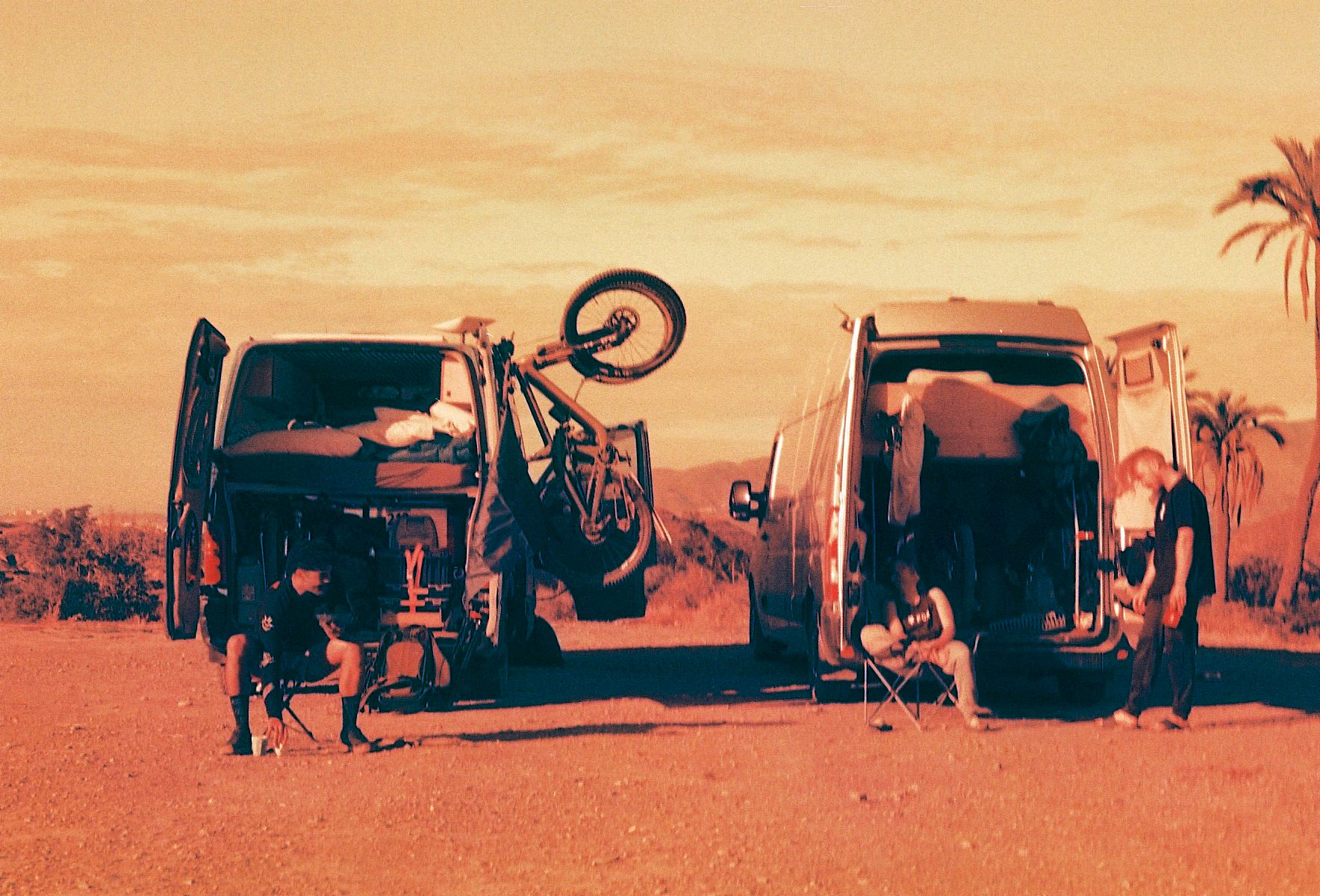
It was all much more labour-intensive than you might realise from watching the finished film. Almost every spot involved off-road driving. Even in a normal van, it was sometimes a real challenge. Rocks everywhere, soft sand, dusty tracks.
On top of that, there was all the water. You don’t just need water to drink, but also for shaping. At times we needed an incredible amount of water just to be able to shape the lines and jumps at all. Sometimes up to 100 litres a day.
So you don’t just drive to the spot, film and head back. You have to fetch water, transport equipment, work out where you can camp, how to get to the next spot and how much energy you’ve got left. That was a bit of an adventure in itself.
Before you could even start filming: how did you find the locations?
Andoni:
We spent an awful lot of time scouting. Much of it was done on the laptop before we even set off. Google Earth, Google Maps, access routes, slopes, terrain features, potential spots. You sit there looking for lines, shadows, structures and paths that might just work.
With well-known bike spots, a lot of things are easier. You’ve got a rough idea of where you need to go, where the jumps are, where others have already ridden, and where you can camp. For us, a lot of it was completely up in the air. We had to figure out a great deal for ourselves.
We’d never have found some spots without Google Maps. Others looked good on the laptop but didn’t work at all when we got there. And then there were places that just happened by chance. That’s exactly what made the project so exciting. It wasn’t just a plan to tick off. It was a constant process of searching, testing and adapting.

A cowgirl keeps popping up in the intro. Who was she, actually?
Chris: That was my girlfriend. She was actually part of the project right from the start, although she never really wanted to be in the spotlight.
When you watch the film, you only see a small part of it. In reality, she helped out an incredible amount. She lent a hand with shaping, lugged equipment around, cooked, organised water and took the pressure off us so that we could concentrate on the project.
It’s with productions like this that you quickly realise just how many things happen alongside the actual filming. You constantly need someone to help out, organise things or simply be there when something doesn’t go to plan. Without her, a lot of it would have been much more difficult.


She even took part in the film itself. She filmed one of the shots in the intro whilst Andoni was flying the drone at the same time. We basically only had one go at it and needed someone who could take over the camera at a moment’s notice.
She was, of course, immediately thrilled by the role of the cowgirl. When we told her the idea, she was straight on board. It fitted the film’s vibe perfectly.
And she didn’t just come along – she rode herself. She tried out some of the lines in the film, even though she’s only been mountain biking for a few years. That actually shows quite well how she approached the whole project: always motivated, always ready to help out and always part of the adventure.

Looking back on the project today: what does *A Fistful of Tapas* mean to you?
Andoni: For me, what sticks with me most of all is that feeling that the project finally became a reality. The idea had been there for a long time. We’d picked it up, pitched it and developed it further time and again over the years.
Then, actually being there – with Vitor, Chris, all the gear, the bikes, the dust and that landscape – was really special. It was a place I knew from my childhood. Suddenly, it turned into a film project.
I think that’s exactly why the film feels different to me. It’s not just a bike video. It also has a personal touch to it.

Vitor: What really sticks in my mind is just how much we had to decide for ourselves there. There were so many possibilities, but nothing was really set in stone. We had to search for every line, assess it and sometimes let it go again.
It wasn’t always easy, but that’s exactly what made it special. It didn’t feel like a spot that had been made just for us. We had to work with what was there.
Chris: For me, the exciting thing was that the terrain wasn’t perfect. It was rough, challenging and sometimes frustrating. But that’s precisely why the lines felt so good in the end. If something worked there, it was because we’d really had to work for it.